Introduction
Growing website traffic is one of the primary goals for most digital businesses. Whether a company provides web development, SaaS solutions, digital consulting, or online services, increased traffic often translates into more leads, customers, and revenue.
However, scaling traffic without a clear SEO strategy can create significant problems.
Many businesses focus aggressively on acquiring visitors without ensuring that their websites, technical infrastructure, and content strategies are prepared for growth. The result is often declining conversion rates, poor user experiences, technical issues, and even search engine penalties.
In today’s AI-driven search environment, sustainable growth requires more than publishing content and building backlinks. Businesses must create a solid SEO foundation capable of supporting long-term expansion.
Organizations that prioritize strategic SEO planning before scaling traffic are better positioned to maintain rankings, maximize conversions, and adapt to Google’s evolving algorithms.
Why Scaling Traffic Without Strategy Can Hurt Growth
Rapid growth can be exciting, but uncontrolled growth often exposes weaknesses that previously went unnoticed.
Many businesses assume that more visitors automatically lead to more revenue. Unfortunately, this is not always true.
Without proper preparation, increased traffic can lead to:
- Slow website performance
- Higher bounce rates
- Poor user experience
- Lower conversion rates
- Technical SEO issues
- Reduced search visibility
For example, an eCommerce business that suddenly receives a surge in organic traffic may struggle if its website architecture, hosting environment, or checkout process cannot handle increased demand.
Similarly, content-heavy websites often experience indexing problems when hundreds of pages are published without proper optimization.
Sustainable growth begins with infrastructure, not traffic alone.
Common SEO Risks Businesses Face During Rapid Expansion
Businesses scaling aggressively frequently encounter several SEO risks.
Thin Content Creation
Many companies increase publishing frequency without maintaining quality standards.
Google’s Helpful Content System rewards genuinely useful content while devaluing pages created solely to attract traffic.
Publishing large volumes of low-value content can damage overall website performance.
Duplicate Content Problems
Expanding websites often generate duplicate pages unintentionally through:
- URL parameters
- Pagination issues
- Product variations
- Content syndication
Duplicate content creates confusion for search engines and dilutes ranking signals.
Crawl Budget Inefficiencies
As websites grow, search engines must crawl larger numbers of pages.
Poor site architecture may cause Googlebot to waste crawl resources on low-value pages while important pages remain under-indexed.
Backlink Profile Risks
Some businesses attempt to accelerate growth using manipulative link-building techniques.
Unnatural backlinks can trigger manual actions or algorithmic penalties that significantly reduce organic visibility.
Growth should always prioritize quality over shortcuts.
Why Technical Website Foundations Matter Before Scaling
Technical SEO serves as the backbone of sustainable growth.
Before increasing marketing efforts, businesses should ensure their websites meet modern technical standards.
Site Speed Influences Rankings and Conversions
Users expect websites to load quickly.
Research consistently shows that slow websites experience:
- Higher bounce rates
- Lower engagement
- Reduced conversions
Google’s Core Web Vitals continue influencing rankings and user experience signals.
Optimizing performance before scaling traffic protects both rankings and revenue.
Mobile-First Experiences Are Essential
Google primarily evaluates websites from a mobile perspective.
Businesses must ensure:
- Responsive layouts
- Fast mobile performance
- Accessible navigation
- Mobile-friendly forms
As mobile usage continues increasing globally, mobile optimization remains non-negotiable.
Scalable Architecture Supports Long-Term Growth
Website architecture should allow future expansion without creating structural problems.
Effective architecture includes:
- Clear navigation
- Logical internal linking
- Organized content hierarchies
- SEO-friendly URLs
A strong foundation makes future optimization significantly easier.
The Role of Conversion-Focused SEO Web Design
Traffic alone does not grow businesses.
Visitors must convert into leads, subscribers, or customers.
This is why conversion-focused SEO web design has become increasingly important for digital businesses.
Modern SEO web design combines:
- Search visibility
- User experience
- Conversion optimization
- Technical performance
Successful websites guide users naturally toward desired actions.
User Experience Influences SEO Performance
Search engines increasingly measure user engagement signals such as:
- Time on page
- Interaction rates
- Bounce rates
- Navigation behavior
Websites designed around user needs often perform better in search results.
Design and SEO Must Work Together
Historically, SEO and design teams often worked independently.
Today, collaboration is essential.
Design decisions directly affect:
- Crawlability
- Page speed
- Accessibility
- Engagement
- Conversion rates
Businesses that integrate design and SEO from the beginning generally achieve stronger long-term outcomes.
Managing Content Quality and Avoiding Algorithm Penalties
Content remains central to organic growth.
However, Google’s algorithms are increasingly sophisticated.
AI-generated or mass-produced content that lacks originality rarely performs well over time.
Focus on Experience and Expertise
Google’s E-E-A-T framework emphasizes:
- Experience
- Expertise
- Authoritativeness
- Trustworthiness
Businesses should create content that demonstrates genuine knowledge and practical insights.
Case studies, examples, expert commentary, and original research help strengthen authority.
Avoid Over-Optimization
Excessive keyword usage, repetitive anchor text, and manipulative tactics can negatively impact rankings.
Modern SEO favors natural language and semantic relevance.
Content should prioritize user value rather than algorithm manipulation.
Maintain Editorial Standards
Growing businesses should establish clear content processes that include:
- Fact-checking
- Quality reviews
- Consistent formatting
- Search intent analysis
Strong editorial standards protect long-term performance.
Why Companies Partner With a Trusted SEO Agency
As search environments become more complex, many organizations seek external expertise.
Managing technical SEO, content strategy, AI optimization, and authority building simultaneously requires significant resources.
Businesses frequently partner with a trusted Rankpage SEO agency to develop scalable SEO strategies aligned with long-term growth objectives.
Professional agencies often provide:
- Technical audits
- Content planning
- Competitor analysis
- Authority-building campaigns
- Performance monitoring
Specialized expertise allows internal teams to focus on core business operations while maintaining consistent SEO growth.
Building Sustainable Traffic Growth Instead of Chasing Quick Wins
Sustainable SEO growth differs significantly from short-term traffic spikes.
Rather than pursuing quick wins, businesses should focus on building durable competitive advantages.
Invest in Topical Authority
Websites that consistently publish high-quality content around specific themes often outperform generalist competitors.
Topical authority strengthens:
- Rankings
- Brand recognition
- User trust
Build High-Quality Backlinks Naturally
Editorial links from reputable publications remain among the strongest ranking signals.
Digital PR, thought leadership, and original content often generate the best long-term results.
Measure Business Outcomes, Not Traffic Alone
Traffic metrics are important, but businesses should also monitor:
- Conversion rates
- Revenue contribution
- Lead quality
- Customer acquisition cost
Growth should support broader business goals.
AI Search Considerations for Growing Businesses
Artificial intelligence is reshaping how search engines present information.
Google AI Overviews, conversational search, and entity-based systems are changing SEO priorities.
Businesses preparing for future search environments should:
Optimize for Search Intent
Content should answer user questions comprehensively and clearly.
Strengthen Entity Signals
Consistent brand mentions across authoritative sources help search engines understand and trust organizations.
Create AI-Friendly Content Structures
Well-structured content featuring:
- Clear headings
- Concise explanations
- FAQs
- Lists
- Summaries
is easier for AI systems to interpret.
Prioritize Trust and Credibility
Trust signals will continue increasing in importance as AI search evolves.
Organizations that establish strong authority today will be better positioned for future visibility.
Conclusion
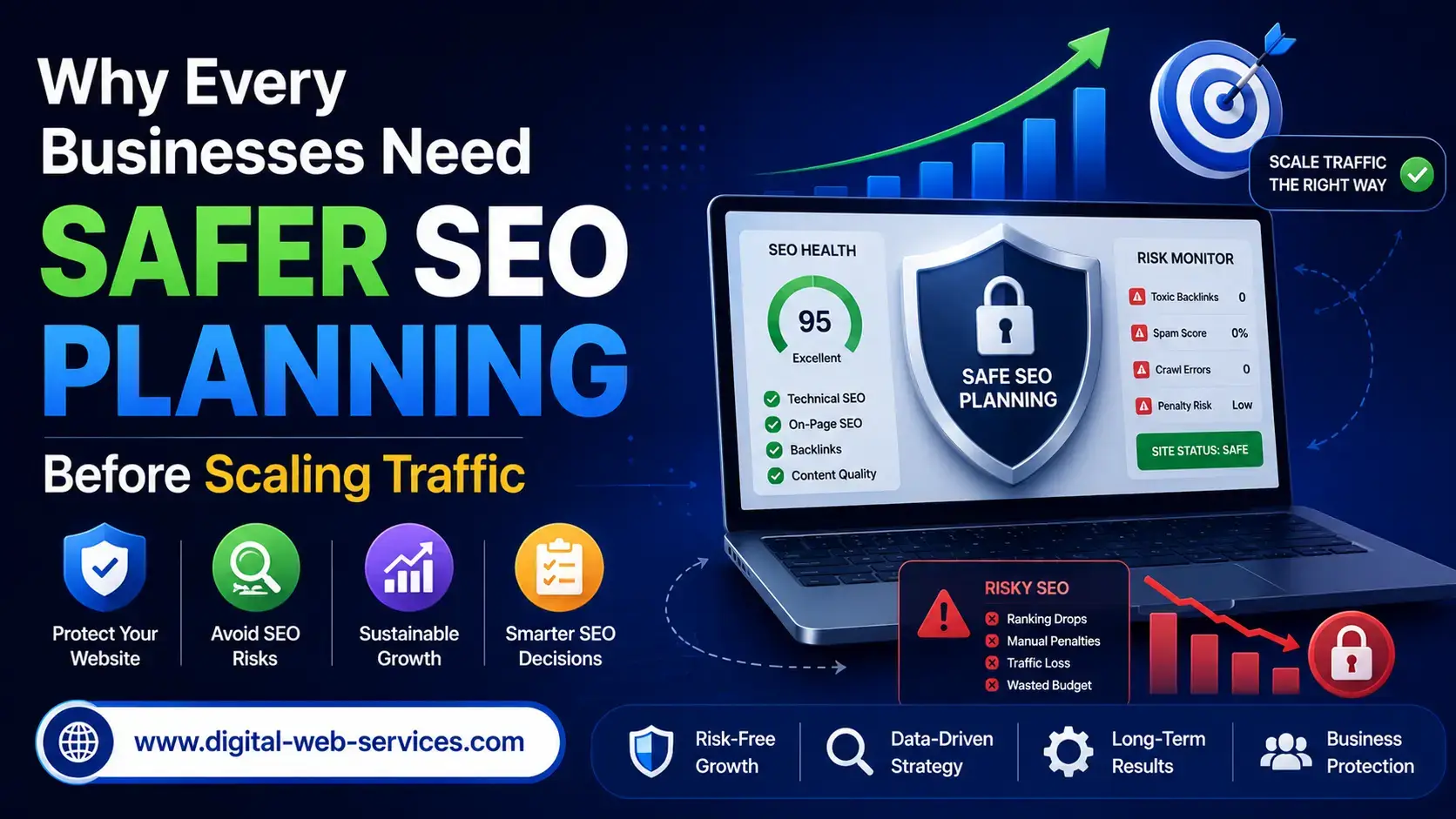
Scaling website traffic without strategic planning can expose businesses to significant risks, including technical issues, poor user experiences, declining conversions, and reduced search visibility.
Digital businesses seeking sustainable growth must prioritize technical foundations, content quality, conversion-focused design, and long-term authority building before aggressively expanding traffic acquisition efforts.
In an increasingly AI-driven search landscape, safer SEO planning is no longer optional. It is essential.
Companies that invest in strong foundations today will be far better prepared to compete, adapt, and grow in the evolving digital ecosystem.

Maria Jain is a Senior Content Strategist and Tech Editor at Digital Web Services, with over 6+ years of experience covering digital marketing, website development, and search engine optimization. She specializes in WordPress site architecture, AI technologies, Web Hosting, topical authority models, and hands-on SaaS & affiliate tool reviews. Maria combines data-driven SEO practices with deep web design and technical insights to publish transparent guides, tool comparisons, and strategic tutorials for digital growth.