The full form of VPN is Virtual Private Network. It is a technology that creates a secure and encrypted connection between your device and the internet. In today’s digital world, where data privacy and online security are major concerns, VPNs have become an essential tool for both individuals and businesses.
Whether you are browsing on public Wi-Fi, accessing restricted content, or protecting sensitive data, a VPN helps you stay secure and anonymous online.
What is VPN and Why It Matters
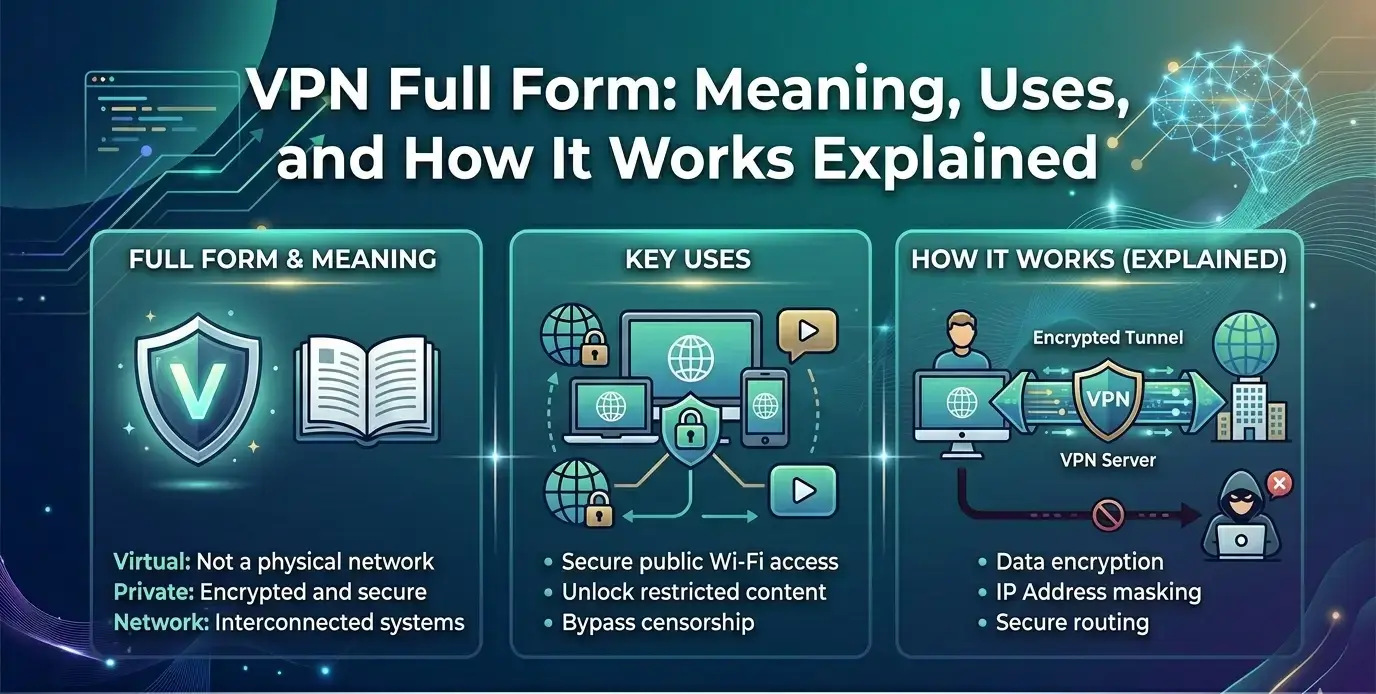
A Virtual Private Network acts like a secure tunnel between your device and the internet. Instead of connecting directly to a website, your data passes through a VPN server, which encrypts the information and hides your identity.
This means:
- Your real IP address is hidden
- Your browsing activity becomes private
- Your data is protected from hackers and trackers
In simple terms, a VPN ensures that your online presence is safe, private, and secure.
How a VPN Works
Understanding how a VPN works is actually quite simple when broken down.
When you connect to a VPN:
- Your device connects to a VPN server
- The VPN encrypts your internet data
- Your real IP address is replaced with the server’s IP
- Your traffic is securely sent to the internet
For example, if you are using public Wi-Fi at a café, anyone on the same network could potentially access your data. But with a VPN, your information is encrypted, making it unreadable to outsiders.
Most VPNs use strong encryption standards like AES-256, which is also used by governments and cybersecurity experts worldwide.
Key Benefits of Using a VPN
Using a VPN offers several practical advantages that directly improve your online experience.
Enhanced Privacy
A VPN hides your IP address and browsing activity, making it difficult for websites, advertisers, or hackers to track you.
Secure Public Wi-Fi Usage
Public Wi-Fi networks are highly vulnerable. A VPN protects your data when you use networks in airports, hotels, or cafes.
Access to Geo-Restricted Content
Many websites and streaming platforms restrict content based on location. A VPN allows you to access content from different regions.
Protection from Cyber Threats
VPNs encrypt your data, protecting you from cyber threats like hacking, phishing, and data theft.
Safe Online Transactions
When making online payments or accessing banking services, a VPN adds an extra layer of security.
Types of VPNs You Should Know
Different types of VPNs serve different purposes depending on the user’s needs.
Remote Access VPN
This is the most common type used by individuals. It allows users to connect securely to a private network from any location.
Site-to-Site VPN
Used by businesses, this type connects entire networks across different locations, such as branch offices.
Personal VPN vs Enterprise VPN
Personal VPNs are designed for individual use, while enterprise VPNs are built for organizations to protect internal data and communication.
Common Use Cases of VPN
VPNs are widely used across different industries and by everyday users.
- Streaming content from other countries
- Securing remote work connections
- Protecting sensitive business data
- Avoiding tracking and surveillance
- Safe browsing on public networks
For example, many professionals working remotely use VPNs to securely access company systems without exposing confidential data.
Is VPN Legal and Safe to Use?
VPN usage is legal in most countries, including India. However, users must ensure they are not using VPNs for illegal activities.
In terms of safety, VPNs are secure if you choose a trusted provider. Reliable VPN services offer:
- No-log policies
- Strong encryption
- Transparent privacy practices
Avoid free VPNs that may track your data or show excessive ads, as they can compromise your privacy.
How to Choose the Right VPN
Choosing the right VPN is important to get the best performance and security.
Here are some key factors to consider:
Security Features
Look for strong encryption, secure protocols (like OpenVPN or WireGuard), and a no-log policy.
Speed and Performance
A good VPN should not significantly slow down your internet speed.
Server Locations
More server locations give you better access to global content.
Free vs Paid VPN
Free VPNs come with limitations, while paid VPNs offer better security, speed, and reliability.
VPN vs Proxy: What’s the Difference?
Many people confuse VPNs with proxies, but they are not the same.
- A VPN encrypts your entire internet connection
- A proxy only hides your IP for specific applications
- VPNs provide better security and privacy
If your goal is complete protection, a VPN is the better choice.
Why VPN is Important Today
With increasing cyber threats, data tracking, and privacy concerns, using a VPN is no longer optional—it is a necessity.
From protecting personal data to enabling secure business operations, VPNs play a crucial role in maintaining digital safety.
FAQs
What is the full form of VPN?
VPN stands for Virtual Private Network. It is a technology that provides a secure and private connection to the internet.
Why do people use a VPN?
People use VPNs to protect their privacy, secure their data, and access restricted content online.
Is VPN safe for daily use?
Yes, VPNs are safe when used with reliable providers that offer strong encryption and privacy policies.
Can a VPN hide my identity?
A VPN hides your IP address, which makes your online activity more anonymous, but it does not make you completely invisible.
Is VPN legal in India?
Yes, VPN usage is legal in India as long as it is not used for illegal activities.
Does a VPN affect internet speed?
VPNs may slightly reduce speed due to encryption, but premium VPNs minimize this impact.
Final Thoughts
Understanding the VPN’s full form and its functionality is essential in today’s internet-driven world. Whether you want privacy, security, or access to global content, a VPN provides a simple yet powerful solution.
If you value your online safety, using a VPN is one of the smartest decisions you can make.

Maria Jain is a Senior Content Strategist and Tech Editor at Digital Web Services, with over 6+ years of experience covering digital marketing, website development, and search engine optimization. She specializes in WordPress site architecture, AI technologies, Web Hosting, topical authority models, and hands-on SaaS & affiliate tool reviews. Maria combines data-driven SEO practices with deep web design and technical insights to publish transparent guides, tool comparisons, and strategic tutorials for digital growth.