SEO is no longer limited to placing keywords inside a blog post and waiting for Google to notice. Search results now include featured snippets, AI Overviews, conversational answers, videos, product listings and other formats competing for the same user’s attention.
AI SEO Course Online – Udemy
The AI SEO Course 2026: From Zero to Page-One Results (AEO, GEO) on Udemy is designed to help learners understand this changing search landscape. It combines traditional SEO skills with AI SEO, Answer Engine Optimisation and Generative Engine Optimisation. ed on its published curriculum, the course covers keyword research, search intent, on-page SEO, technical audits, structured data, link building, Google Analytics 4, Google Search Console and the use of tools such as ChatGPT and Gemini. eady to build practical SEO skills for 2026?
AI SEO Course 2026- Key Details:

What Are AEO and GEO?
Answer Engine Optimisation (AEO)
Answer Engine Optimisation, commonly called AEO, focuses on making information easy for search engines and digital assistants to understand and present as a direct answer.
This can involve:
- Answering important questions clearly and early
- Using descriptive headings
- Organising information logically
- Matching the user’s actual search intent
- Supporting claims with reliable evidence
- Adding relevant structured data where appropriate
AEO can support visibility in featured snippets, voice-search results, People Also Ask sections and other answer-led experiences.
Generative Engine Optimisation (GEO)
Generative Engine Optimisation, or GEO, focuses on improving the likelihood that content will be discovered or referenced within generative search experiences.
GEO is not a replacement for SEO. Google describes terms such as AEO and GEO as different ways of talking about visibility in AI search, while maintaining that the core work remains SEO. strongest GEO strategy is therefore not a mysterious collection of AI hacks. It is credible, well-structured and genuinely useful content supported by sound technical SEO.
What Will You Learn in This Udemy AI SEO Course?
1. SEO Foundations
The opening sections introduce the basic purpose of SEO and explain the difference between organic and paid search.
Learners are introduced to concepts such as:
- Crawling, indexing and ranking
- Search engine results pages
- Organic traffic
- On-page, off-page and technical SEO
- White-hat and black-hat techniques
- Helpful, people-first content
This section should be useful for beginners who need to understand how the pieces fit together before opening five SEO tools and immediately regretting it.
2. Keyword Research and Search Intent
The course explains how to identify keywords based on relevance, competition, estimated search volume and user intent.
It covers informational, navigational, commercial and transactional searches, helping learners understand why someone is searching rather than treating every keyword as an isolated phrase.
The curriculum also includes:
- Seed keyword research
- Long-tail keyword opportunities
- Competitor keyword analysis
- Question-based searches
- Google Trends
- Google Autocomplete
- People Also Ask
- Keyword grouping and mapping
- Keyword cannibalisation
Tools such as Ubersuggest, ChatGPT and Gemini are demonstrated during the research process. 3. On-Page SEO
On-page SEO helps search engines and visitors understand the purpose of an individual page.
The course covers title tags, meta descriptions, URLs and other page-level elements. It also discusses writing search snippets that communicate relevance while encouraging qualified users to click.
This is particularly valuable for bloggers, affiliate marketers and small businesses that already publish content but struggle to turn impressions into meaningful traffic.
4. Technical SEO
A polished article cannot perform well when search engines cannot access or process the page properly.
The published learning outcomes include technical SEO audits covering:
- Website speed
- Mobile friendliness
- JavaScript rendering problems
- Crawlability
- Indexing
- Other technical barriers that can affect rankings
The course also introduces structured data for content such as FAQs, products and how-to pages. uctured data can help Google understand page information and may make a page eligible for supported rich-result formats. However, adding markup does not guarantee enhanced visibility or rankings. 5. AI SEO, AEO and GEO
A major reason to consider this course in 2026 is its inclusion of newer search topics.
The curriculum discusses:
- Google AI Overviews
- Generative Engine Optimisation
- Answer Engine Optimisation
- AI-assisted keyword research
- Identifying gaps in AI-generated answers
- Using ChatGPT, Gemini and Perplexity for research
- Creating content designed around useful questions
- Improving visibility across Google and AI platforms
Google recommends creating original, useful and expert-led content rather than rewriting ordinary information solely for AI systems. It also states that no special AI text file or unique AI schema is required for visibility in Google’s generative search experiences. t distinction matters. The goal is not to produce content that sounds like it was written for a robot. The goal is to make useful expertise easier for both people and machines to find.
Want to understand SEO beyond the traditional ten blue links?
[View the Complete AEO and GEO Curriculum – [AFFILIATE LINK]]
6. Link Building
Backlinks remain an important part of establishing a website’s reputation and authority, but quality matters far more than collecting random links from suspicious websites with names such as “BestSEOArticleDirectory247”.
The course includes ethical link-building methods such as:
- Broken link building
- The Skyscraper Technique
- Finding relevant outreach opportunities
- Monitoring acquired links
- Protecting valuable backlinks
- Building a sustainable backlink strategy
Its stated approach focuses on creating a stronger, penalty-resistant backlink profile rather than relying on manipulative link schemes. 7. Analytics and SEO Performance
SEO decisions become more useful when they are supported by actual performance data.
The course introduces Google Analytics 4 and Google Search Console to help learners monitor rankings, traffic and other indicators of organic performance. se skills can help learners move beyond vague statements such as “the blog seems to be doing well” and identify which pages, queries and optimisation efforts are producing results.
8. Starting an SEO Career
The curriculum also includes guidance for learners interested in providing SEO services professionally.
Topics include:
- Building an SEO portfolio
- Finding potential clients
- Presenting SEO recommendations
- Pricing SEO services
- Developing an actionable SEO process
This makes the course relevant not only to website owners but also to students, freelancers and digital marketers considering SEO as a career.
Who Should Take This AI SEO Course?
This course may be suitable for:
SEO Beginners
The early modules introduce fundamental concepts without assuming advanced technical knowledge.
Bloggers and Affiliate Marketers
Learners can use keyword research, content optimisation, internal organisation and search-intent analysis to attract more relevant organic visitors.
Small-Business Owners
Business owners can learn how to evaluate their website, identify search opportunities and communicate more effectively with agencies or freelancers.
Digital Marketing Professionals
Marketers who already understand basic SEO can use the AI SEO, AEO and GEO sections to update their knowledge of modern search experiences.
Freelancers and Career Changers
The portfolio, client acquisition and pricing lessons may help learners prepare to offer entry-level SEO services.
Content Writers
Writers can develop a better understanding of search intent, E-E-A-T, content structure and the relationship between helpful writing and organic visibility.
How Does the Course Address E-E-A-T?
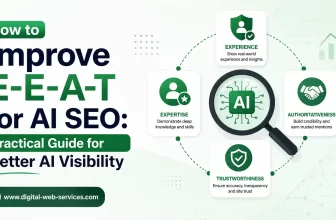
E-E-A-T stands for:
- Experience
- Expertise
- Authoritativeness
- Trustworthiness
Google’s people-first content guidance encourages creators to demonstrate first-hand knowledge, clearly identify who created the content, explain how it was produced where relevant and prioritise accuracy and usefulness. course includes lessons on producing content that demonstrates genuine E-E-A-T rather than relying on keyword repetition. rners should still apply these principles independently by:
- Publishing accurate author information
- Adding real examples and original observations
- Citing reliable sources
- Reviewing and updating outdated pages
- Avoiding fabricated qualifications or experience
- Disclosing commercial relationships
- Correcting errors when they are discovered
E-E-A-T is not a line of code or a plugin setting. It is the overall impression created by the content, author, website and supporting evidence.
Potential Benefits of the Course
Based on the current published curriculum, its main strengths include:
- Coverage of both foundational and AI-era SEO
- A structured path for beginners
- Lessons covering AEO and GEO
- Practical keyword and competitor research
- Technical SEO guidance
- Ethical link-building methods
- GA4 and Search Console coverage
- Career and client-acquisition modules
- Nearly 15 hours of video lessons
- A substantial existing learner and rating history Points to Consider Before Enrolling
No single online course can guarantee rankings, traffic or revenue. Search performance depends on competition, website quality, available resources, implementation and many other factors.
Prospective students should also consider the following:
- SEO requires practical implementation, not passive viewing.
- Tools and interfaces may change after lessons are recorded.
- Some learners may already know the introductory material.
- Results usually require consistent work over time.
- Course completion does not automatically establish professional expertise.
- Claims about achieving particular rankings should be treated as goals, not guarantees.
The sensible approach is to use the course as a structured learning resource, then test each concept on a real website or personal project.
How to Get Better Results From the Course
Create a Practice Website
Apply lessons to a real website rather than collecting notes that will never escape a forgotten Google Doc.
Complete One Action After Each Module
For example, research keywords after the keyword section, improve title tags after the on-page section and run an audit after the technical section.
Keep a Record of Changes
Document what was changed, when it was changed and what happened afterwards. This creates evidence of practical experience and can later support a portfolio.
Verify Important Advice
Search platforms evolve quickly. Compare course recommendations with current Google Search documentation before making major technical changes.
Focus on One Website First
Testing every idea across multiple unfinished projects can create plenty of activity without producing much progress. One properly implemented project is usually more valuable than six abandoned experiments.
Is This AI SEO Course Worth Considering in 2026?
The course is worth considering for learners who want one structured programme covering SEO fundamentals alongside AI Overviews, AEO, GEO, technical SEO and link building.
Its curriculum appears particularly suitable for beginners, affiliate marketers, content creators, small-business owners and aspiring SEO freelancers. More experienced professionals may find some introductory modules familiar, although the AI SEO and career-focused sections could still be relevant.
The real value will depend on implementation. Watching nearly 15 hours of SEO training can provide knowledge. Applying it to a website is what turns that knowledge into experience.
Affiliate Disclosure: This article contains affiliate links. If you enrol in the course through one of these links, we may earn a commission at no additional cost to you. This commission helps support our website and content. Our opinions, reviews and recommendations remain independent and are based on the course information available at the time of writing.

Maria Jain is a Senior Content Strategist and Tech Editor at Digital Web Services, with over 6+ years of experience covering digital marketing, website development, and search engine optimization. She specializes in WordPress site architecture, AI technologies, Web Hosting, topical authority models, and hands-on SaaS & affiliate tool reviews. Maria combines data-driven SEO practices with deep web design and technical insights to publish transparent guides, tool comparisons, and strategic tutorials for digital growth.