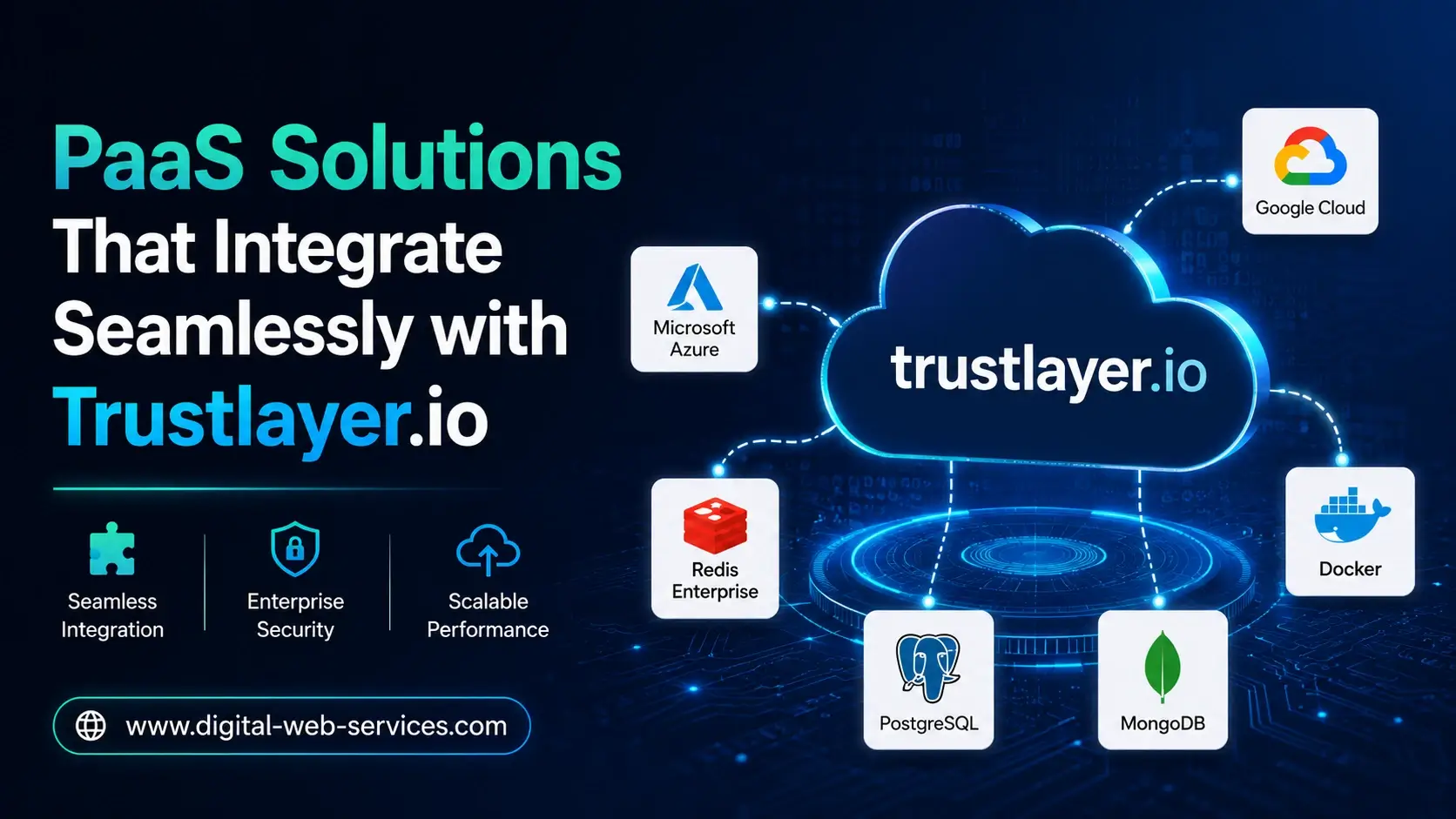
Platform as a Service (PaaS) solutions offer businesses the flexibility and scalability needed to enhance their operations, particularly when integrating with specialized platforms like https://www.trustlayer.io/. TrustLayer provides a robust framework for compliance verification, allowing companies to automate the verification of insurance and business partners. With the right PaaS, businesses can ensure seamless integration that leverages TrustLayer’s capabilities to streamline processes and enhance efficiency. This article will explore PaaS solutions that enhance TrustLayer integration, examine seamless integration capabilities, highlight key features, and discuss how to choose the right PaaS for compatibility.
PaaS Solutions Enhancing TrustLayer Integration
PaaS solutions that integrate seamlessly with TrustLayer often leverage Microservices Architecture, enabling independent deployment and scalability of applications. This architecture allows businesses to adapt quickly to changing requirements while maintaining high performance. For example, a recent Forrester report highlighted that companies using PaaS with microservices see a 35% improvement in agility and speed of deployment. These solutions can efficiently manage data and processes, ensuring that the integration with TrustLayer is both comprehensive and flexible.
Moreover, incorporating API Gateway capabilities can enhance the interaction between TrustLayer and other business applications. An API Gateway acts as a bridge, facilitating secure and efficient communication between different software components. By employing a robust API Gateway, businesses can ensure that data flows seamlessly between TrustLayer and other systems, maintaining data integrity and compliance.
Finally, adopting a Zero Trust Security Model is critical for protecting sensitive data during integration. TrustLayer, which deals with compliance and verification, must ensure that all interactions are secure. A Zero Trust approach ensures that every access request is verified, minimizing the risk of data breaches and ensuring GDPR Compliance.
Exploring Seamless Integration Capabilities
Seamless integration capabilities are vital when choosing a PaaS solution for TrustLayer. The DevOps Pipeline plays a crucial role here, enabling continuous development and deployment. By using a CI/CD (Continuous Integration/Continuous Deployment) approach, businesses can automate the integration process, reducing deployment time and minimizing errors. This automation is particularly beneficial when integrating TrustLayer, as it ensures that updates and changes are deployed efficiently without disrupting existing processes.
Additionally, PaaS solutions that support Edge Computing can provide enhanced performance by processing data closer to its source. This is particularly useful for businesses that require real-time data processing and verification, as it reduces latency and improves response times. Recent analysis from Gartner indicates that companies leveraging edge computing see a 40% improvement in data processing efficiency.
Utilizing Blockchain Ledger technology in conjunction with TrustLayer can further enhance data security and transparency. Blockchain offers an immutable record of transactions, ensuring that compliance verifications are tamper-proof and easily auditable. This technology is especially beneficial for industries where data integrity is paramount.
Key Features of PaaS for TrustLayer
When selecting a PaaS solution several key features should be considered. First, the ability to support Data Lake Architecture is essential for managing large volumes of data efficiently. Data Lakes offer a centralized repository that can handle diverse data types and formats, making it easier to integrate and analyze data from TrustLayer.
Another critical feature is the inclusion of Agile Scrum Master capabilities, which can enhance project management and collaboration during integration. Agile methodologies allow teams to adapt quickly to changes, ensuring that the integration process remains on track and aligned with business objectives.
Furthermore, implementing a strong ITIL Framework ensures that all processes related to integration are standardized and optimized for efficiency. ITIL provides a set of best practices for managing IT services, which can significantly enhance the integration of TrustLayer by ensuring that all systems operate harmoniously.
Choosing the Right PaaS for TrustLayer Compatibility
Choosing the right PaaS for TrustLayer compatibility involves evaluating several factors. Businesses should consider the scalability of the PaaS solution, ensuring that it can grow alongside their needs. Additionally, evaluating the SaaS Metrics provided by the PaaS vendor can give insights into performance and reliability, making it easier to make an informed decision.
Penetration Testing capabilities are essential for ensuring that the integration is secure. Regular testing can identify vulnerabilities and help businesses take proactive measures to protect their data. Moreover, compatibility with Robotic Process Automation (RPA) can streamline repetitive tasks, freeing up resources for more strategic activities.
Finally, businesses should ensure that the chosen PaaS solution supports Cloud Native Applications, allowing them to fully leverage the benefits of cloud computing. This compatibility is crucial for maintaining flexibility, scalability, and efficiency in the integration process.
Conclusion
Integrating TrustLayer with the right PaaS solution can significantly enhance business operations by ensuring seamless data flow and compliance verification. By focusing on key features such as Microservices Architecture, API Gateway, and Zero Trust Security Model, companies can achieve successful integration and improve efficiency. Choosing a PaaS solution that supports TrustLayer compatibility will provide long-term benefits, enabling businesses to adapt quickly to changing market demands and maintain a competitive edge.

Maria Jain is a Senior Content Strategist and Tech Editor at Digital Web Services, with over 6+ years of experience covering digital marketing, website development, and search engine optimization. She specializes in WordPress site architecture, AI technologies, Web Hosting, topical authority models, and hands-on SaaS & affiliate tool reviews. Maria combines data-driven SEO practices with deep web design and technical insights to publish transparent guides, tool comparisons, and strategic tutorials for digital growth.