
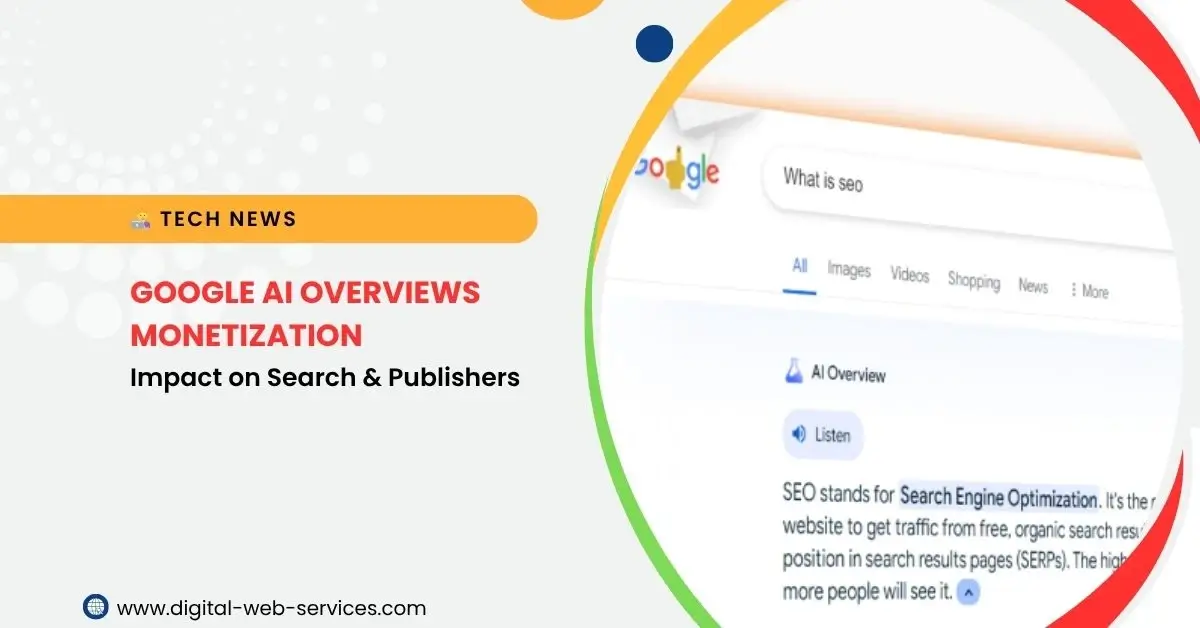
Google’s integration of AI Overviews into its search results has sparked a significant debate about the future of search, its monetization, and the ripple effects on content creators and advertisers. While Google steadfastly claims that AI Overviews monetize at the same rate as traditional search results, the broader implications for the digital ecosystem are still unfolding.
Google’s Stance: Revenue Parity Through A/B Testing
Google executives have repeatedly asserted that AI Overviews maintain revenue parity with traditional search. This assertion is based on rigorous A/B testing, where identical search queries are presented to different user groups – some with AI Overviews and some without. Google measures the advertising revenue generated from both groups, and according to their findings, the rates are comparable.
Shashi Thakur, Google’s VP/GM of Advertising, explained this methodology, emphasizing that the focus is on overall business value and revenue, not individual metrics like click-through rates. This suggests that even if user behavior shifts (e.g., fewer clicks to external websites), Google believes it can compensate for this by optimizing ad placements within or around the AI Overviews, or by generating more valuable ad impressions through higher-intent queries.
Google’s monetization strategy for AI Overviews involves integrating ads in various placements: above the AI response, below it, and even directly within the AI-generated answer itself. These ads, which can include both text-based search ads and product-listing shopping ads, are sourced from existing Google Ads campaigns, meaning advertisers generally don’t need to create entirely new campaigns for AI Overviews. Google aims to identify commercial intent within more complex, conversational queries, which AI Overviews are designed to handle, potentially leading to more precise and valuable ad targeting.
The Publisher Predicament: Concerns Over Traffic and Revenue
Despite Google’s assurances, many publishers and content creators express significant apprehension about the impact of AI Overviews on their traffic and, consequently, their ad revenue. The core concern revolves around the concept of “zero-click searches,” where users find the answers they need directly within the AI Overview, negating the need to click through to an external website.
Studies and anecdotal evidence from publishers suggest that AI Overviews can lead to a substantial decrease in click-through rates (CTRs) to their sites. Some reports indicate drops of 30-50% in RPM (revenue per mille) for queries that trigger AI responses, and even larger overall revenue declines for publishers heavily reliant on search traffic. This creates a difficult dilemma for publishers: Google dominates the search market, making it almost impossible to opt out of appearing in AI Overviews without sacrificing search visibility altogether.
Furthermore, a significant point of contention is Google’s lack of transparency regarding AI Overview traffic within standard analytics tools like Google Search Console. This makes it challenging for publishers to accurately measure the impact of AI Overviews on their individual sites and adapt their strategies accordingly. Many publishers feel they are essentially providing the content that fuels Google’s AI, only to see their traffic diverted and their revenue streams threatened.
The Evolving Search Landscape and Advertiser Adaptation
The introduction of AI Overviews signifies a fundamental shift in how users interact with search. Users are increasingly asking longer, more complex, and conversational queries, moving away from traditional keyword-based searches. Google views this as an opportunity to expand the “kinds of curiosities” users can express and to provide more comprehensive, synthesized answers directly within the search results page.
For advertisers, this evolving landscape necessitates adaptation. Google is pushing for increased automation through tools like “AI Max for Search” campaigns, which are designed to dynamically customize ads and drive users to the most relevant landing pages, even within new AI-powered search experiences. Early beta testing of AI Max has shown promising results, with advertisers experiencing an average 27% increase in conversions while maintaining similar return on investment (ROI).
The future of search advertising will likely involve:
- Optimizing for AI: Advertisers will need to focus on creating high-quality, comprehensive content that AI models can easily summarize and reference.
- Adapting Keyword Strategies: Traditional keyword targeting may become less effective, requiring a shift towards understanding broader search intent and more conversational queries.
- Embracing Automation: Leveraging Google’s AI-powered advertising tools will be crucial for effective campaign management in this new environment.
- Focusing on Value Beyond Clicks: Advertisers may need to reconsider how they measure success, potentially focusing more on overall business outcomes and brand presence rather than solely on direct website traffic from search results.
FAQs on Google AI Overviews Monetization
Q: Does Google claim AI Overviews monetize at the same rate as traditional search results?
A: Yes, Google consistently claims that AI Overviews generate equivalent advertising revenue to traditional search results. This is based on internal A/B testing where they compare queries with and without AI Overviews.
Q: How does Google monetize AI Overviews?
A: Google integrates ads directly into AI Overviews. These can appear above, below, or within the AI-generated summary, using existing Search and Shopping ad campaigns. Google aims to identify commercial intent within complex queries to deliver relevant ads.
Q: What are the main concerns for publishers regarding AI Overviews?
A: Publishers are primarily concerned about a decrease in referral traffic due to “zero-click searches,” where users get their answers directly from the AI Overview. This can lead to a significant drop in ad revenue for their websites. There are also concerns about a lack of transparency in Google’s analytics regarding AI Overview traffic.
Q4: How does Google measure the monetization of AI Overviews?
A: Google uses controlled A/B testing. They compare the total advertising revenue generated from identical search queries, some of which trigger AI Overviews and some that don’t. Their focus is on overall business value rather than individual metrics like click-through rates.
Q: Will advertisers need to create new campaigns specifically for AI Overviews?
A: Generally, no. Google states that ads within AI Overviews are pulled from existing Google Ads campaigns, including Search and Shopping campaigns. However, advertisers will need to adapt their strategies to align with the new AI-driven search behaviors.
Q: How can publishers adapt to the changes brought by AI Overviews?
A: Publishers may need to focus on diversifying their revenue streams beyond traditional display advertising, such as subscriptions or direct reader revenue. They should also prioritize creating high-quality, authoritative content that AI models can easily reference, and explore ways to optimize for visibility within the evolving search landscape.
Q: Is AI Overviews impacting all types of searches equally?
A: AI Overviews are currently more prevalent for informational queries, where users are seeking direct answers. However, Google is gradually expanding their reach to commercial and navigational queries as well.
Conclusion
Google’s AI Overviews represent a significant evolution in search, aiming to provide more direct and comprehensive answers to user queries. While Google asserts that this shift maintains its monetization rates, the impact on publishers is a complex and evolving issue. As AI continues to reshape the digital landscape, both advertisers and content creators will need to adapt their strategies to navigate this new era of search, ensuring continued relevance and sustainable business models.
| Also Read: WhatsApp is Actively Adding New Features to Make Status More Creative and Personal
You can follow us on Google News for more interesting, latest news and updates


Maria Jain is a Senior Content Strategist and Tech Editor at Digital Web Services, with over 6+ years of experience covering digital marketing, website development, and search engine optimization. She specializes in WordPress site architecture, AI technologies, Web Hosting, topical authority models, and hands-on SaaS & affiliate tool reviews. Maria combines data-driven SEO practices with deep web design and technical insights to publish transparent guides, tool comparisons, and strategic tutorials for digital growth.