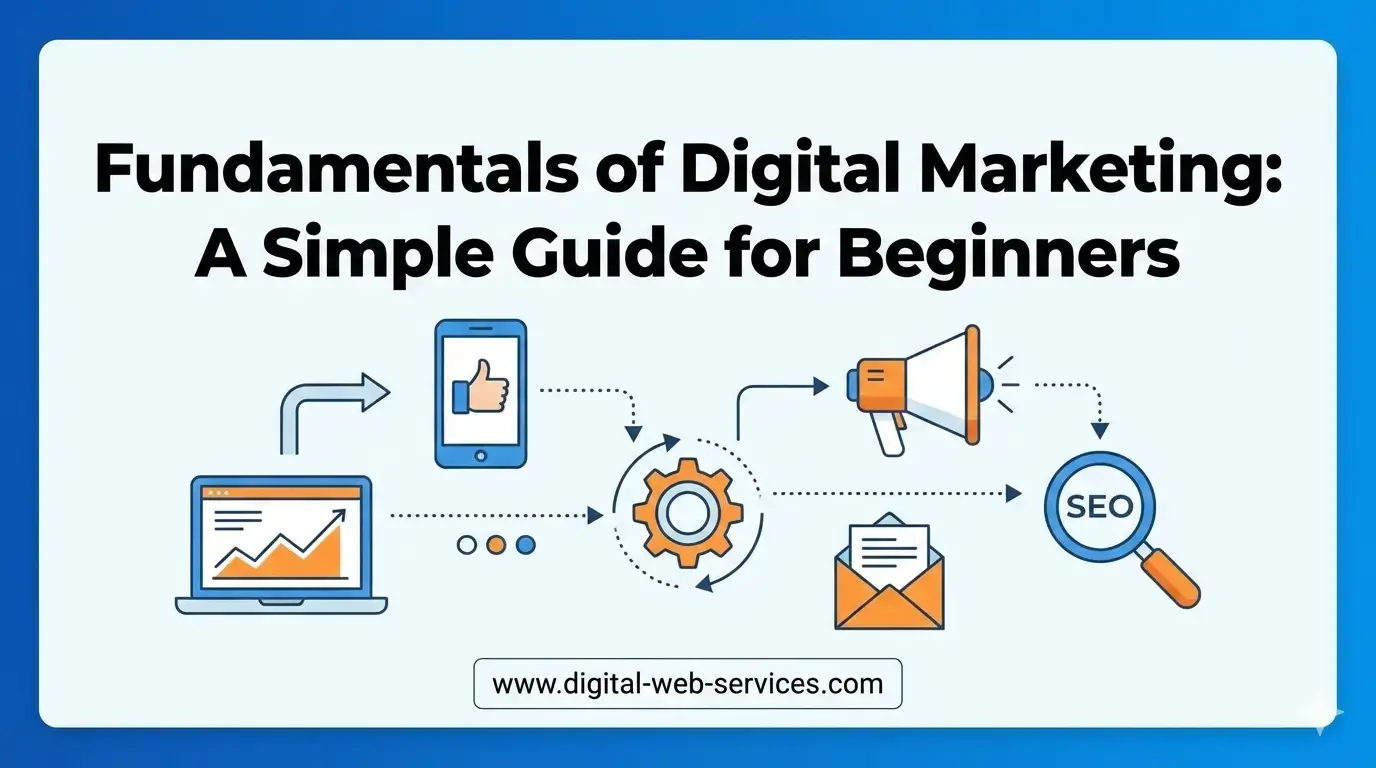
Digital marketing is the process of promoting products or services using the internet. It helps businesses reach the right people at the right time through search engines, social media, email, and paid ads. Unlike offline promotion, it allows real-time tracking, better targeting, and direct interaction with users.
Today, almost every business relies on digital marketing to grow traffic, generate leads, and increase sales. Understanding the fundamentals is the first step to building a strong marketing base.
What Is Digital Marketing?
Digital marketing refers to all marketing activities that use online channels to connect with customers. These channels include search engines, websites, social media platforms, email, and paid advertising networks.
The main goal is simple:
- Attract the right audience
- Build trust through useful content
- Convert visitors into customers
Because results can be tracked instantly, businesses can improve campaigns quickly and spend budgets wisely.
Core Fundamentals of Digital Marketing
1. Understanding Your Audience
Every successful strategy starts with knowing who you are targeting. This includes:
- Age, location, and interests
- Online behavior and search intent
- Problems they want to solve
When you understand your audience, your content and ads feel relevant instead of forced.
2. Creating Valuable Content
Content is the foundation of digital marketing. It helps attract users and build trust.
Common content types include:
- Blog posts
- Videos
- Social media posts
- Infographics
- Email newsletters
Good content educates, answers questions, or solves problems. It is written for people first, not just search engines.
3. Using Data and Analytics
Analytics helps measure what works and what does not. By tracking data, marketers can improve results over time.
Important metrics include:
- Website traffic
- Click-through rate
- Conversion rate
- Cost per lead
Data removes guesswork and supports better decisions.
The 4 Ps of the Digital Marketing Mix
The traditional marketing mix also applies online, with a modern touch.
- Product: Physical or online products, apps, or services
- Price: Flexible pricing models, discounts, or subscriptions
- Place: Websites, apps, or marketplaces
- Promotion: Search ads, social media ads, email, and content
All four must work together for strong results.
POEM Framework in Digital Marketing
The POEM model groups marketing channels into three types:
- Paid Media: Search ads, display ads, social media ads
- Owned Media: Website, blog, email list, social pages
- Earned Media: Reviews, shares, backlinks, mentions
A balanced mix helps build trust and long-term visibility.
The Digital Marketing Funnel
The marketing funnel shows how users move from awareness to loyalty.
- Awareness – Users discover your brand
- Consideration – They compare options
- Conversion – They take action
- Retention – They return and engage again
Each stage needs different content and messaging.
Key Digital Marketing Channels
Search Engine Optimization (SEO)
SEO improves website visibility in organic search results. It focuses on:
- Keyword research
- Content quality
- Technical structure
- User experience
SEO brings long-term traffic without paying for every click.
Social Media Marketing
Social media platforms help brands connect with users directly. It supports:
- Brand visibility
- Community building
- Engagement and sharing
Popular platforms include Instagram, LinkedIn, Facebook, and TikTok.
Pay-Per-Click Advertising (PPC)
PPC is a paid method where advertisers pay for clicks. Common platforms include Google Ads and social media ads.
Benefits include:
- Instant traffic
- Precise targeting
- Budget control
Content Marketing
Content marketing focuses on creating useful material that attracts users naturally. Blogs, videos, and guides help build authority and trust.
Email Marketing
Email marketing sends targeted messages to subscribers. It is widely used for:
- Lead nurturing
- Offers and updates
- Customer retention
It remains one of the highest-return channels.
Affiliate and Influencer Marketing
This method uses partners or creators to promote products. They earn a commission for every sale or lead generated.
It works well for:
- Brand trust
- Wider reach
- Performance-based growth
Measuring Success with KPIs
Tracking the right metrics helps improve campaigns.
Key performance indicators include:
- Click-Through Rate (CTR) – Clicks divided by impressions
- Conversion Rate – Users who complete a goal
- Cost Per Acquisition (CPA) – Cost to get one customer
- Engagement Rate – Likes, shares, and comments
These numbers show whether campaigns are effective.
Learning Digital Marketing the Right Way
Beginners should start with structured learning and real practice.
Helpful options include:
- Free certification courses
- Practical projects
- Hands-on tools like analytics dashboards
Learning step by step builds strong fundamentals.
FAQs: Fundamentals of Digital Marketing
What are the fundamentals of digital marketing?
They include audience research, content creation, SEO, paid advertising, analytics, and performance tracking.
Is digital marketing suitable for beginners?
Yes. Anyone can start by learning basic concepts and practicing with small campaigns.
Which digital marketing channel is best?
There is no single best channel. The right mix depends on goals, budget, and audience.
How long does it take to see results?
Paid campaigns show quick results, while SEO and content take time but last longer.
Do small businesses need digital marketing?
Yes. It helps small businesses compete, reach local users, and grow online visibility.

Maria Jain is a Senior Content Strategist and Tech Editor at Digital Web Services, with over 6+ years of experience covering digital marketing, website development, and search engine optimization. She specializes in WordPress site architecture, AI technologies, Web Hosting, topical authority models, and hands-on SaaS & affiliate tool reviews. Maria combines data-driven SEO practices with deep web design and technical insights to publish transparent guides, tool comparisons, and strategic tutorials for digital growth.