
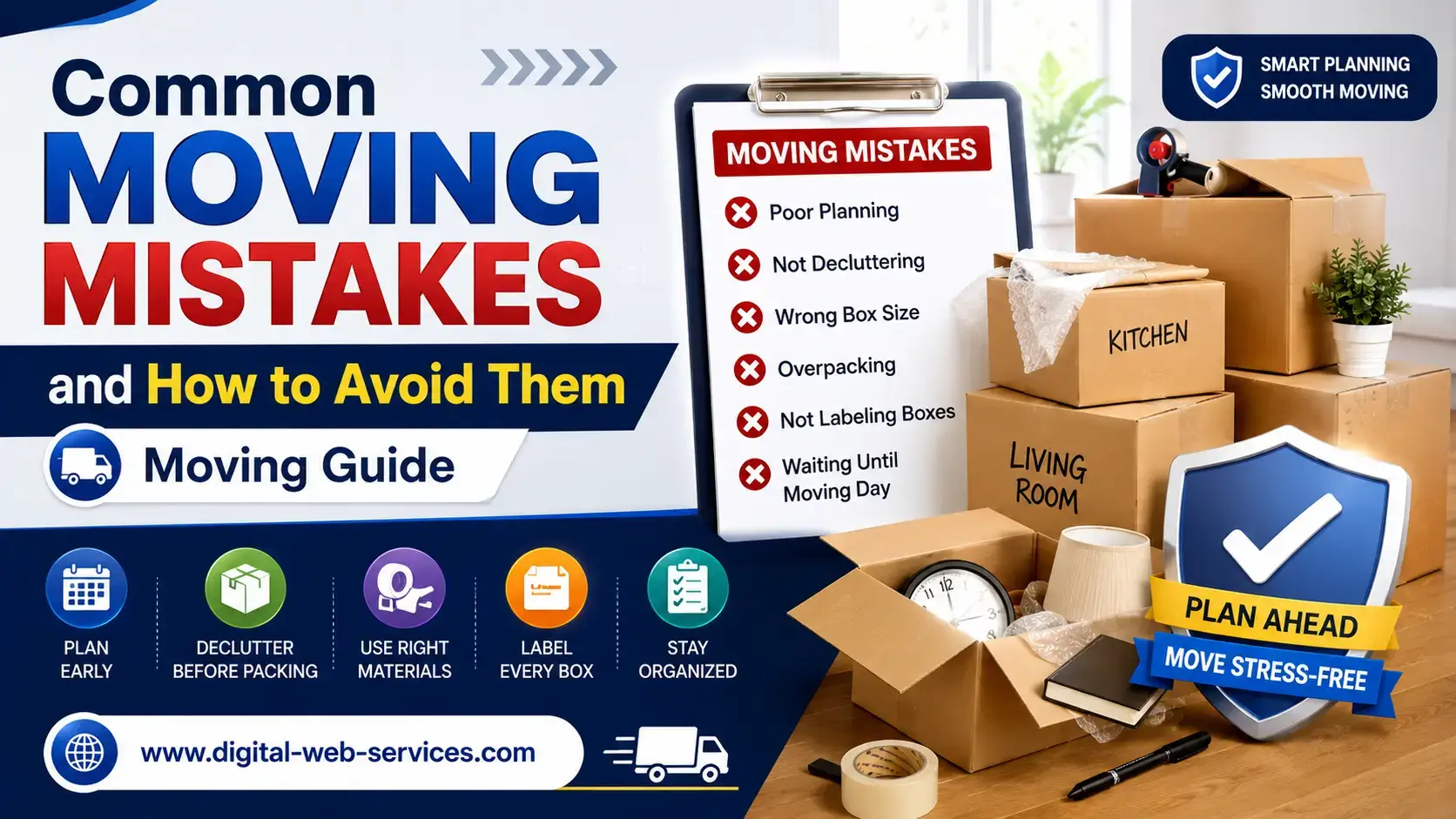
Moving has a funny way of looking simple until you are standing in a room full of half-packed boxes, wondering where the tape went. Keys vanish. Plates crack. The truck feels too small. And somehow, there is always one drawer nobody remembers.
Here’s the bright side: most moving stress starts before moving day, which means you can prevent a lot of it. One helpful reminder: “Stress drops from 42% before to 19% after [the move], while relief increases from 20% to 48% once you settle in.” A little planning now can save you a lot of sighing later.
Top Moving Mistakes That Sabotage Your Relocation Plans
Even careful people get surprised by how quickly a move grows legs. What starts as “just a few boxes” turns into paperwork, packing, phone calls, cleaning, and that one closet you avoided for three years. Let’s look at the big moving mistakes that can throw off your plans.
Underestimating Packing Time
Packing almost always takes longer than you think. That is one of the most common moving mistakes, and it usually begins with the dangerous sentence, “We can do it this weekend.”
Start with the rooms you use least. Closets, guest rooms, decorations, books, garage shelves, and storage bins are good first targets. Leave daily essentials for later.
Give yourself time to sort, wrap, label, donate, and toss. Packing spreads like laundry. Ignore it for one day, and suddenly it owns the house.
Skipping Professional Support
If your move is long-distance, complicated, or packed with special details, safe ship moving services can make the process feel far less chaotic. They help coordinate licensed and insured carrier options, handle important move details and documents, and offer support from planning through delivery.
That extra guidance matters when you are crossing state lines, moving specialty items, or trying to relocate while working, parenting, and keeping life somewhat normal. Cheap help is not always cheap if delays, damage, or confusion show up later.
Using Weak Packing Supplies
Flimsy boxes are fine until they are not. When a box gives out in the driveway, you learn very quickly that old grocery cartons were not meant for dishes, books, or anything breakable.
Use sturdy boxes, packing paper, strong tape, corner guards, and padding. Towels can go in reused boxes. Glassware should not.
Label fragile items clearly, but do not rely on the label alone. Pack things well enough that they can survive a bumpy ride without needing good luck.
The less clutter you move, the less you pay in money, time, and energy. Once you know the common traps, the next step is building a system that keeps you out of them.
Key Strategies to Avoid Moving Mistakes
Knowing what can go wrong helps. But knowing how to avoid moving mistakes comes down to one thing: stop trusting memory when life is busy. Put the plan somewhere you can actually see it.
Build a Master Checklist
A master checklist turns a stressful project into a set of smaller jobs. It tells you what needs to happen next, which is exactly what your tired brain will need.
Include booking dates, packing deadlines, utility transfers, school records, pet arrangements, address changes, donation pickups, and final cleaning tasks.
Keep it easy to update. A shared phone note works beautifully. No fancy binder required, unless you love binders. No judgment.
Declutter Before Packing
The risk is real: “Misplacing an item is the most common moving mistake, made by 23.7% of movers.” Fewer items mean fewer chances for something to disappear.
Sort everything into keep, donate, sell, and toss piles. Be blunt with yourself. If a box has been sealed since your last move, does it really deserve another trip?
Decluttering before packing also makes unpacking easier. In the future, you will be grateful. Probably with coffee in hand.
Protect Documents and Valuables
Some things should never ride in the moving truck. Passports, IDs, medical records, jewelry, medications, chargers, laptops, financial papers, and irreplaceable keepsakes should stay with you.
Use one “do not load” bag or bin. Put it in your car before anyone starts carrying boxes.
That one small move can save you weeks of stress. A good inventory and smart prep turn “I hope this works out” into “I know where the important stuff is.”
Smart Choices That Make Moving Day Easier
Moving day is rarely perfect. Weather changes. Elevators get busy. Someone blocks the loading zone. The goal is not perfection; it is flexibility. These choices help reduce common moving errors before they snowball.
Compare Your Moving Options
Not every move needs the same solution. A studio move across town is a different beast from a four-bedroom house heading across state lines.
Moving Choice | Best Fit | Main Risk | Smart Fix |
|---|---|---|---|
| Full DIY | Small local moves | Too many trips | Reserve the right truck early |
| Hybrid move | Tight budgets | Confusing roles | Decide who packs, loads, and drives |
| Professional coordination | Long or complex moves | Poor carrier choice | Check reviews, credentials, and terms |
| Temporary storage | Date gaps | Rushed loading | Label storage items by priority |
Plan for Weather, Traffic, and Access
Rain, heat, traffic, narrow streets, elevators, stairs, parking rules, and school pickup lines can slow everything down. Check building rules early. Reserve loading space if you can. Confirm access times before the move.
Take photos of tricky entrances, tight staircases, or awkward parking areas. Movers can plan better when they know what they are walking into.
Set Up the New Home Early
Your first night should not involve sitting in the dark, hunting for toilet paper, or trying to connect to Wi-Fi from a half-dead phone.
Transfer power, water, internet, trash service, and other utilities before arrival. If you have kids or pets, set up one calm room first. A familiar blanket, food bowl, or favorite toy can make a strange new place feel less overwhelming.
Once the basics are handled, a few practical moving tips can make the rest of the process much easier.
Insider Tips for a Smooth Move
Good planning gets your belongings from one place to another. Smart tactics make sure you can actually find them when you arrive. These tips for a smooth move help save space, reduce damage, and make unpacking less painful.
Pack Room by Room
Pack one room at a time whenever possible. It keeps random items from getting mixed together and prevents the dreaded “mystery box” problem.
Label each box with the destination room and a short contents note. “Kitchen” is okay. “Kitchen: mugs, towels, coffee filters” is much better.
Color tape or stickers can help if several people are unloading. Simple systems work because people actually use them.
Use Technology Wisely
Your phone can do more than play moving-day playlists. Use it to photograph box contents before sealing them. Keep receipts, inventory notes, mover details, and task lists in one place.
A quick video walkthrough of your current home can also help when arranging furniture later. It is not glamorous, but it works.
Prepare a Moving-Day Survival Kit
A missing charger or screwdriver can turn a normal delay into a full meltdown. Pack a small kit with snacks, water, medicine, pet food, toilet paper, trash bags, wipes, chargers, scissors, tape, and basic tools.
Keep it off the truck. Seriously. Put it somewhere you can reach without digging through twenty boxes.
Even with a strong plan, things can go sideways if you ignore warning signs. So let’s talk about contracts, quotes, and last-minute red flags.
Red Flags and Quick Fixes Before You Move
Most moving disasters do not come out of nowhere. They usually start with small warning signs people overlook because they are tired, rushed, or just ready to be done. Spotting those issues early is one of the best moving tips you can follow.
Read the Moving Contract
The fine print matters. It explains what you are paying for, what is covered, what fees may apply, and what happens if something goes wrong.
Look for delivery windows, added charges, claim rules, cancellation terms, and inventory details. If anything sounds vague, ask for it in writing.
Verbal promises have a strange habit of disappearing.
Watch for Moving Scams
Moving scams thrive when people feel rushed. Be careful with unusually low quotes, large upfront deposits, no written paperwork, or companies that refuse to share basic licensing details.
If the pressure feels wrong, pause. Your gut is not being dramatic. It may be saving you from a costly mess.
Confirm Heavy and Bulky Items
Large furniture, appliances, pianos, safes, and specialty items can cause major delays if they do not fit, cannot be disassembled, or need special handling.
Measure doorways, hallways, stair turns, elevators, and entry points before loading day. Remove legs if needed. Wrap corners. Put screws and hardware in labeled bags.
Tiny screws can create very big problems.
Final Thoughts on a Mistake-Free Move
A smooth move does not happen because everything goes perfectly. It happens because you planned for the messy parts: packing delays, lost items, unclear contracts, bad weather, and bulky furniture.
Use a checklist. Label every box. Keep important documents with you. Get help when the move is too complex to handle alone.
The best way to avoid common moving errors is to deal with them before they happen. Start with one small task today. Tape a box. Make the list. Book the help. Your calmer move begins there.
Common Questions About Moving Mistakes
When moving day gets close, the questions start coming fast. These quick answers cover the ones people usually ask when the boxes are stacking up.
What is the hardest room to pack when moving?
The kitchen is usually the hardest because it has fragile dishes, sharp tools, heavy appliances, and lots of small items. Pack it in stages, keep daily basics aside, and use padding generously.
What do movers not recommend moving?
Movers typically don’t recommend moving hazardous items, open liquids, perishable food, plants on long trips, cash, jewelry, medications, or personal documents. Keep valuables and essentials with you instead of loading them onto the truck.
What’s the best way to avoid last-minute moving stress?
Start earlier than feels necessary, confirm every booking in writing, and pack essentials separately. A clear checklist, labeled boxes, and a realistic schedule prevent most last-minute panic before it starts.
With those answers covered, the final step is simple: turn the advice into action.

Maria Jain is a Senior Content Strategist and Tech Editor at Digital Web Services, with over 6+ years of experience covering digital marketing, website development, and search engine optimization. She specializes in WordPress site architecture, AI technologies, Web Hosting, topical authority models, and hands-on SaaS & affiliate tool reviews. Maria combines data-driven SEO practices with deep web design and technical insights to publish transparent guides, tool comparisons, and strategic tutorials for digital growth.