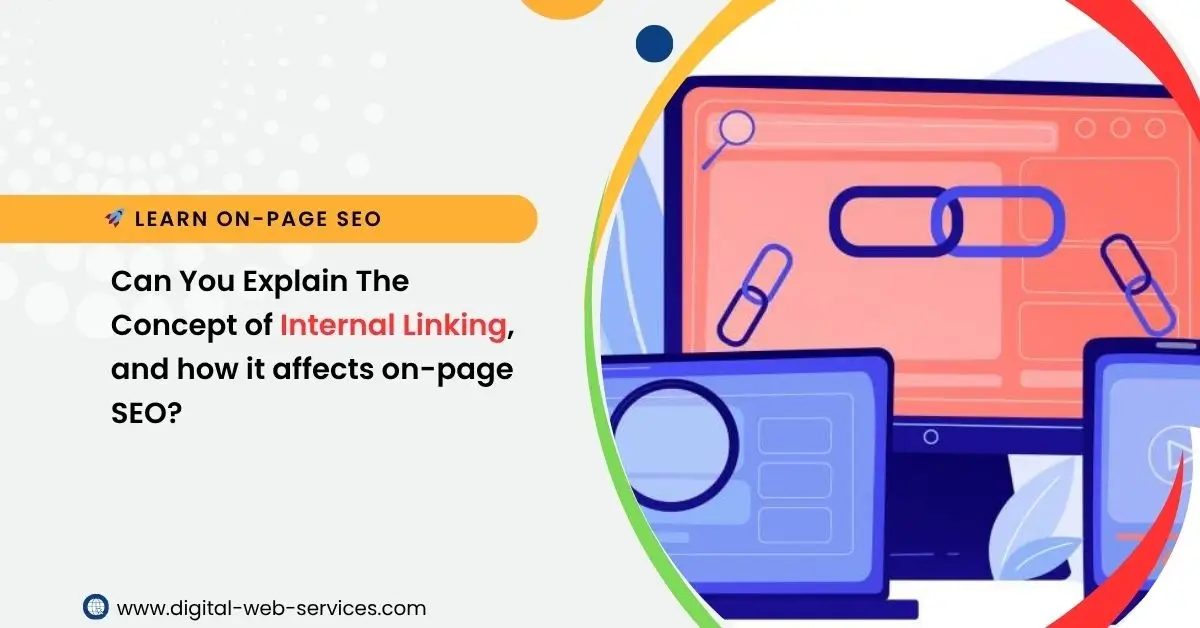
What is Internal Linking?
Internal linking refers to the practice of linking one page of your website to another page within the same domain. This strategy plays a vital role in enhancing user navigation and the overall performance of your site on search engines. By linking relevant content together, you help both users and search engines understand the structure of your website and the relationships between different pages.
The Role of Internal Linking in On-Page SEO
Internal linking serves several critical functions when it comes to on-page SEO:
1. Improved Website Navigation:
Internal links help visitors easily find relevant content on your website. By strategically placing links to other articles, pages, or sections, users can explore more content without feeling lost.
2. Boosting Page Authority:
Pages that receive more internal links often pass on authority to other pages. This helps improve the rankings of pages with fewer backlinks, by distributing link equity across the website.
3. Enhanced Crawlability by Search Engines:
Search engine bots crawl websites by following links. Internal links make it easier for search engines to discover all the pages on your website, index them, and understand the structure of your site.
4. Contextual Relevance:
Linking to related content on your site allows you to establish topical relevance. This can help search engines understand what your content is about and improve the likelihood of ranking for specific keywords.
5. Reduced Bounce Rate:
Internal links encourage users to stay on your site longer by exploring related content. The longer a visitor stays on your website, the more likely search engines will view your site as valuable, potentially improving your rankings.
Best Practices for Internal Linking
- Use Descriptive Anchor Text:
Ensure that the anchor text (the clickable words) accurately describes the linked content. This improves the relevance and SEO of the linked page. - Link Deep Pages:
Don’t just link to your homepage or top-level pages. Deep linking to other valuable content on your website can help those pages gain authority and rank better. - Link to Important Pages:
Ensure that your most important pages (such as product pages or high-converting landing pages) receive a reasonable amount of internal links to boost their authority. - Limit the Number of Internal Links:
While internal links are beneficial, over-linking can be counterproductive. Focus on quality rather than quantity to maintain a user-friendly and SEO-friendly experience. - Ensure Natural Linking:
Always make sure that internal links are naturally integrated within the content. Forced or excessive links can lead to a poor user experience and may even hurt your SEO efforts.
Conclusion
Internal linking is a powerful on-page SEO technique that can drastically improve the structure and performance of your website. By implementing a smart internal linking strategy, you enhance navigation, boost SEO rankings, and provide better value for both your users and search engines. Learn on-page SEO with Digital Web Services to further optimize your site’s SEO and attract organic traffic.
By understanding and implementing effective internal linking practices, you can give your website a competitive edge in the ever-evolving world of search engine optimization.

Maria Jain is a Senior Content Strategist and Tech Editor at Digital Web Services, with over 6+ years of experience covering digital marketing, website development, and search engine optimization. She specializes in WordPress site architecture, AI technologies, Web Hosting, topical authority models, and hands-on SaaS & affiliate tool reviews. Maria combines data-driven SEO practices with deep web design and technical insights to publish transparent guides, tool comparisons, and strategic tutorials for digital growth.