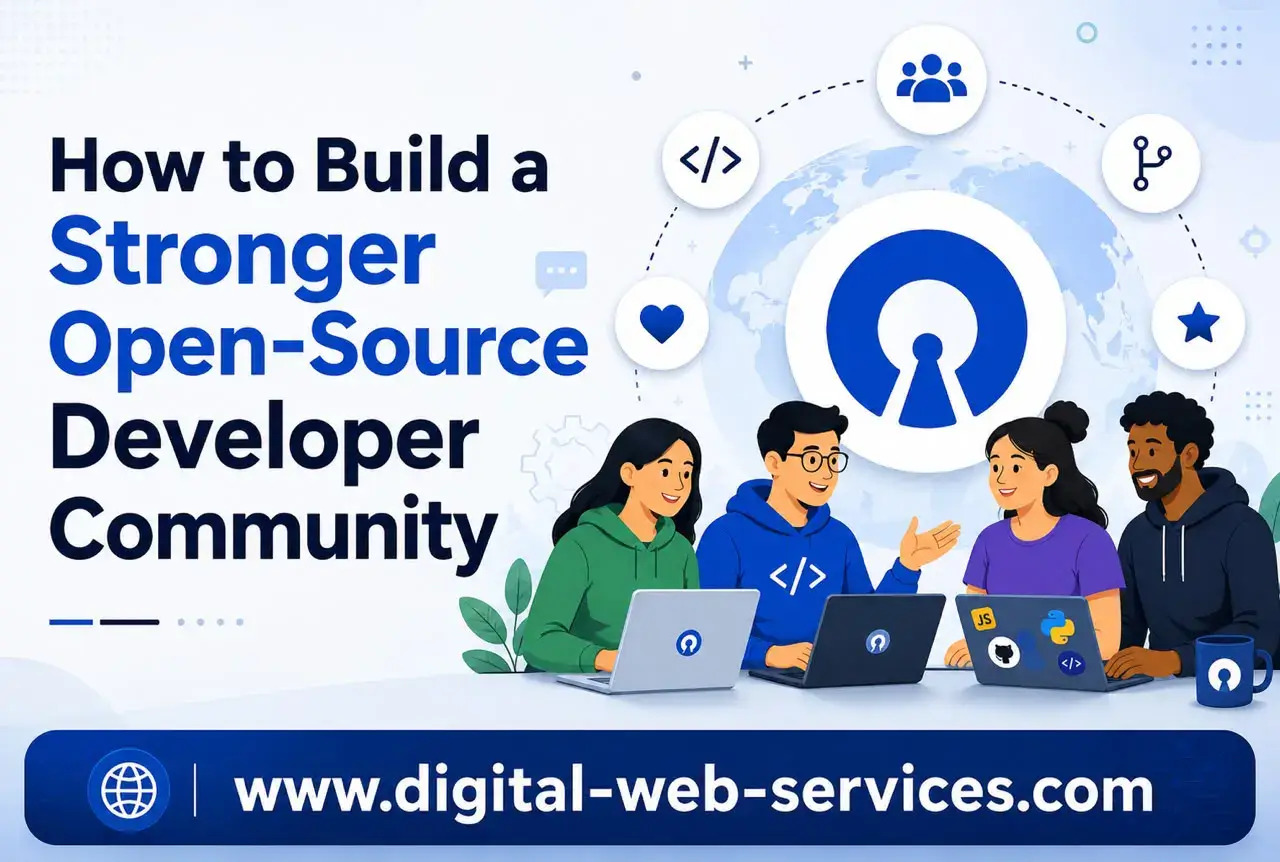
A strong open-source community is measured by how many people who show up once come back a second time.
GitHub added 36 million new developers in 2025 alone, and at the same time, close to 60% of maintainers say they have either quit or seriously considered quitting the projects they run. Growth on one side, exhaustion on the other. A stronger community means closing that gap on purpose, not hoping it closes itself. Lets learn how we can do that in this blog.
What Actually Counts as a “Strong” Community?
A star costs a developer one click and asks for nothing back.
A fork, a comment on an open issue, or a first pull request costs real time, so that is the signal worth watching.
The number that matters most is simple and rarely tracked: how many first-time contributors send a second pull request within three months.
A project can have thousands of stars and a shrinking group of people actually doing the work. That gap is the whole problem this piece is about.
Why Are So Many Maintainers Burning Out Right Now?
Because the volume of the work grew faster than the support behind it. A 2024 Tidelift survey found that 60% of open-source maintainers have either quit a project or seriously considered it, and 60% of them receive no payment at all for the work for the software they maintain.
A newer pressure has stacked on top of that: low-quality, AI-generated bug reports and pull requests, now commonly called “AI slop,” are eating the hours maintainers used to spend on real contributions.
Daniel Stenberg, who maintains curl, one of the most widely used pieces of software on the internet, has described sorting through these reports as dealing with “mind-numbing stupidities” that consume time without adding anything back.
A separate Intel survey found 45% of maintainers now name burnout as their single biggest challenge.
None of this is an argument against open source. It is an argument for treating community health as infrastructure, something you build and maintain on purpose, not a side effect of a good README.
How Do You Make Someone’s First Contribution Easy?
Most people who would contribute never do, because the first step is unclear. Three things fix most of that:
- A CONTRIBUTING.md that states, in plain language, how to set up the project locally, how to run the tests, and how a pull request actually gets reviewed.
- A small set of issues labeled specifically for first-time contributors, scoped small enough to finish in an afternoon.
- And a fast, kind response to that first pull request. Whether that person becomes a repeat contributor is decided far more by how the first interaction feels than by how good the code was.
A visible code of conduct helps too, not as a legal formality, but as a signal that the maintainers have already thought about what a respectful project looks like before a problem shows up.
Where Should Community Conversations Actually Live?
This trips up more projects than it should. Real-time chat tools like Discord and Slack feel active and welcoming, and they are genuinely good for casual conversation.
The problem is that a technical answer posted in a Discord channel is effectively gone the moment it scrolls past.
It is not indexed, it does not show up in a search, and the next person with the same question has to ask it again from scratch.
Technical questions and answers belong somewhere that stays searchable: GitHub Discussions, GitHub Issues, or a public forum tied to the repo.
Keep the real-time chat for what it is good at: quick back-and-forth, community feel, and casual conversation. Don’t let it become the place where the project’s actual knowledge disappears.
How Do You Protect the Maintainers You Already Have?
Part of the strain is now structural. GitHub’s own Octoverse research points out that open-source contributors today are spread across the world and cannot rely on shared working hours, communication habits, or even a shared language, which makes every project harder to coordinate than it looks from the outside.
A few habits help directly.
- Get to at least two maintainers with commit access on anything more than a hobby project, so one person leaving doesn’t stall everything.
- Set clear triage rules so obviously low-effort or AI-generated submissions get closed fast instead of eating a maintainer’s evening.
- And treat saying no to a pull request as a normal part of the job, not a failure of community management.
A maintainer who can say no without guilt lasts longer than one who tries to accept everything.
Does Any of This Matter If Nobody Finds the Project First?
All of the above assumes people are already arriving at the repo. For most open-source projects, that is the harder problem. A well-run community with no visibility is still invisible, and a project that never shows up in GitHub search, on Reddit, in awesome lists, or in AI-generated answers has no one to onboard in the first place.
That is a distribution problem, and it takes a different set of moves entirely. If your repo is solid but nobody is finding it, in this case you’d need a GitHub marketing service because that is built specifically for this gap.
FAQs
Q: What’s the difference between GitHub stars and a real developer community?
A star is a one-click bookmark that asks nothing of the person who gave it. A real community is made of people who fork, comment, and send pull requests, actions that cost real time and signal actual commitment to the project.
Q: Why do open-source maintainers burn out?
The workload has outpaced the support behind it. A 2024 Tidelift survey found 60% of maintainers have quit or considered quitting, most work unpaid, and a newer flood of low-quality AI-generated reports and pull requests now eats hours that used to go toward real contributions.
Q: Should an open-source project use Discord or GitHub Discussions?
Use both, but for different jobs. Keep technical questions and answers in GitHub Discussions or Issues, where they stay searchable for the next person. Save Discord or Slack for casual, real-time conversation, not the project’s core knowledge.
Q: How do you get more first-time contributors to come back?
Make the first pull request easy to attempt and fast to review. A clear CONTRIBUTING.md, a handful of well-scoped good-first-issue labels, and a quick, kind response to that first submission matter more to retention than the quality of the code itself.

Maria Jain is a Senior Content Strategist and Tech Editor at Digital Web Services, with over 6+ years of experience covering digital marketing, website development, and search engine optimization. She specializes in WordPress site architecture, AI technologies, Web Hosting, topical authority models, and hands-on SaaS & affiliate tool reviews. Maria combines data-driven SEO practices with deep web design and technical insights to publish transparent guides, tool comparisons, and strategic tutorials for digital growth.