Quick Insights:
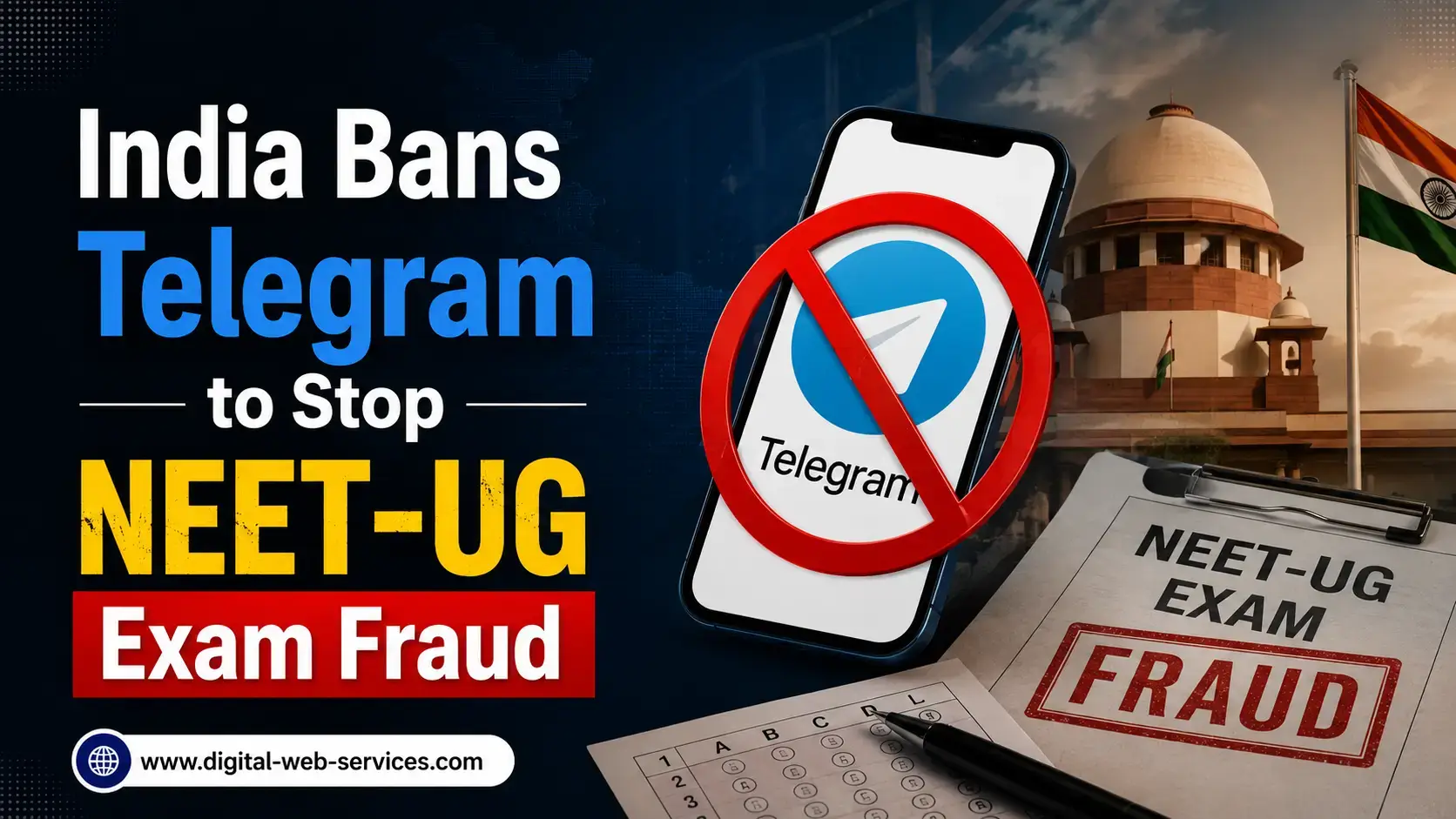
- India has temporarily banned Telegram until June 22, 2026 under Section 69A of the IT Act, acting on the National Testing Agency’s request to stop paper-leak scams before the NEET-UG 2026 re-exam on June 21.
- The ban hits 150 million-plus Indian users, and the government also ordered Telegram to switch off message editing until June 30 to block backdating tricks used to fake “proof” of leaks.
- The Delhi High Court upheld the ban, while Telegram CEO Pavel Durov called it a “mistake,” warning that real leaks come from insiders and the scams simply moved to other apps.
Why Did India Ban Telegram?
India temporarily blocked Telegram across the country to protect one of its biggest and most high-pressure exams: the NEET-UG medical entrance test. The Ministry of Electronics and Information Technology (MeitY) issued the order under Section 69A of the IT Act, 2000, after the National Testing Agency (NTA) flagged the platform as a hotspot for organized cheating rackets.
The timing is the key. The original NEET-UG 2026 exam, taken by more than 2.27 million students on May 3, was cancelled on May 12 after investigators found that a “guess paper” circulating before the test overlapped heavily with the real question paper. A re-exam was scheduled for June 21, 2026, and the government did not want a repeat of the chaos. The Telegram ban runs until June 22, covering exam day and the hours right after it.
In short: this is a temporary ban tied to one specific event, not a permanent shutdown of the app.
The Three Core Reasons Behind the Ban
The government and the NTA pointed to a clear pattern of misuse. Here is what was actually happening on the platform.
1. Extortion Through Fake “Leaked” Papers
Scammers ran anonymous channels with names like “Paper Leaked NEET,” “Re-NEET 2026,” and “Private Mafia.” They sold fake question papers to anxious students, demanding anywhere from a few thousand rupees up to ₹10 lakh. In most cases the buyer either got nothing or received an old, useless paper.
2. Timestamp Manipulation (the Backdating Trick)
This is the clever and dangerous part. Fraudsters used Telegram’s message-editing feature to quietly swap a PDF inside an old post after the exam was over. Because the post still showed the original date, it looked like the paper had leaked days earlier. This fake “proof” was designed to trigger public panic and pressure officials into cancelling exams.
3. A Platform That Was Hard to Control
The Centre argued that Telegram’s architecture — anonymous channels, bots, and bulk messaging without human checks — made it easy for criminals to operate and hard for authorities to trace. During the court hearing, a government lawyer compared the uncooperative platform to a “Frankenstein” used by bad actors.
To directly kill the backdating scam, the government also ordered Telegram to disable message editing for all Indian users until June 30, 2026.
Also Read: How to Create Your Username on WhatsApp – Digital Guide
FAQs on Bans Telegram
Why did India ban Telegram in June 2026?
India banned Telegram temporarily to stop exam-fraud rackets selling fake leaked papers before the NEET-UG 2026 re-exam. MeitY issued the block under Section 69A of the IT Act on the National Testing Agency’s request.
How long is the Telegram ban in India?
The Telegram ban runs until June 22, 2026 — one day after the NEET-UG re-exam on June 21. Separately, message editing stays disabled for Indian users until June 30, 2026.
Is Telegram banned permanently in India?
No. This is a temporary, time-bound restriction tied to the NEET-UG re-exam, not a permanent ban. Access is set to return after June 22, 2026.
What is Section 69A of the IT Act?
Section 69A of the IT Act, 2000 lets the Indian government order the blocking of online content or platforms in the interest of public order and national security. It was used here to restrict Telegram.
Did the Delhi High Court allow the Telegram ban?
Yes. The Delhi High Court rejected Telegram’s petition and upheld the government’s temporary ban, treating it as a limited measure that expires on June 22, 2026.
Is there a real leaked NEET-UG re-exam paper?
No. The NTA has confirmed no genuine re-exam paper is available. Any account selling a “leaked paper” is a scam. Report such offers at neet.nta.nic.in instead of paying.
What did Pavel Durov say about the ban?
Telegram CEO Pavel Durov called the ban a “mistake,” saying it punishes 150 million ordinary users instead of the insiders who leak exams, and that the scams simply moved to other apps.
Note: This article is for general information and is based on verified news reports as of June 19, 2026. Exam-related details can change quickly — always confirm the latest status on the official NTA website, neet.nta.nic.in.

Maria Jain is a Senior Content Strategist and Tech Editor at Digital Web Services, with over 6+ years of experience covering digital marketing, website development, and search engine optimization. She specializes in WordPress site architecture, AI technologies, Web Hosting, topical authority models, and hands-on SaaS & affiliate tool reviews. Maria combines data-driven SEO practices with deep web design and technical insights to publish transparent guides, tool comparisons, and strategic tutorials for digital growth.