
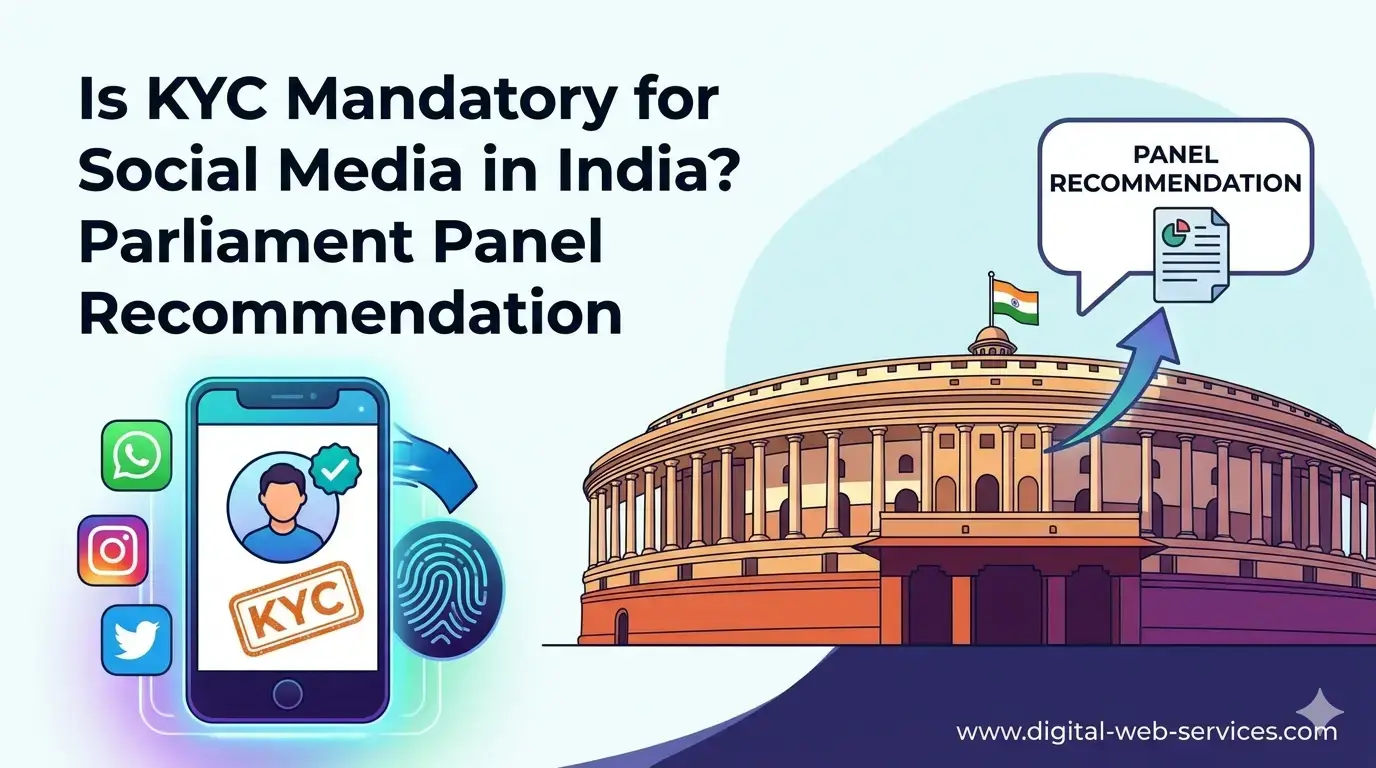
A fresh recommendation from a parliamentary panel has started a major discussion in India’s digital space. The panel has suggested mandatory KYC verification for social media users, along with stronger age checks for dating and gaming platforms. The proposal is part of the Committee on the Empowerment of Women’s Fourth Report on cyber crimes and cyber safety of women.
At the moment, KYC is not mandatory for social media users in India. Under the IT Rules, 2021, significant social media intermediaries must provide a voluntary user verification option, not a compulsory one. That makes the latest development a recommendation, not a law or final rule.
What the Parliament Panel Has Recommended
The panel has asked for KYC-based identity verification across social media, dating apps, and gaming platforms. It has also pushed for age verification systems to help protect children and teenagers online. The goal is to reduce fake profiles, impersonation, anonymous abuse, and cyberstalking, especially in cases that affect women and minors.
The recommendation also goes beyond one-time sign-up checks. The panel has suggested regular re-verification of users and closer monitoring of accounts that receive repeated complaints. It has proposed stronger platform accountability and action against repeated non-compliance as part of a wider attempt to improve online safety.
Why This Social Media KYC Proposal Matters
The debate around social media KYC in India is growing because fake and anonymous accounts are often linked to online harassment, identity misuse, and the non-consensual sharing of private content. The panel believes that identity verification can make platforms safer by making it harder for bad actors to hide behind fake accounts.
This is especially important in discussions about cyber safety for women and minors. With stronger user verification and age checks, platforms may be able to act faster on harmful behavior and stop repeat offenders from creating fresh accounts easily. That is the central idea behind the recommendation.
Privacy Concerns Around Mandatory KYC for Social Media
Even though the recommendation is aimed at safety, it has already raised questions about privacy and data protection. If social media KYC becomes mandatory, platforms may need to collect and store more personal information from users. That creates a new layer of concern around how this data will be managed, protected, and shared. The recommendation also raises wider questions about anonymity online.
This is why the issue is getting attention from both safety advocates and privacy experts. Supporters say KYC can reduce misuse. Critics say any such system must include strong safeguards so user data does not create fresh risks. That balance will likely shape the next stage of the policy discussion.
Is KYC Mandatory for Social Media in India Right Now?
No, social media KYC is not mandatory in India right now. The current law only provides for voluntary verification for users on significant social media platforms. The parliamentary panel’s recommendation may influence future policy, but it does not automatically change the law. Any compulsory system would still need government action, rule changes, or new legal steps before it can be enforced.
What Could Happen Next
The recommendation has been sent for government consideration, and it may shape future debate around social media regulation, cybercrime law, and digital safety in India. If the government decides to move ahead, the next steps could include new rules, a clearer compliance framework for platforms, and stronger identity and age verification systems. For now, the proposal remains a recommendation, but it has clearly opened a serious policy discussion.
Final Take
The question many users are asking is simple: is KYC mandatory for social media in India? The answer today is no. But the Parliament panel’s recommendation shows that stronger user verification, age checks, and platform responsibility are now central to the conversation around online safety. If the proposal moves forward, it could change how social media platforms operate in India and how users prove who they are online.
FAQs
Is KYC mandatory for social media in India?
No. KYC is not mandatory for social media users in India at present. Current rules provide only a voluntary verification option on significant social media platforms.
What has the Parliament panel recommended?
The panel has recommended mandatory KYC-based identity verification for social media, dating, and gaming platforms, along with stronger age verification measures.
Why does the panel want mandatory KYC?
The panel believes mandatory KYC could help reduce fake accounts, impersonation, cyberstalking, and anonymous harassment, especially against women and minors.
Will social media platforms have to verify age too?
Yes, age verification is part of the recommendation. The panel has called for stronger age checks to improve protection for children and teenagers online.
Is this recommendation already a law?
No. It is a recommendation from a parliamentary committee. It will only become enforceable if the government introduces and adopts legal or regulatory changes.
What are the privacy concerns with social media KYC?
The main concerns are data privacy, data storage, misuse of personal information, and the effect on anonymous speech online. These concerns are being discussed alongside safety benefits.
If you want, I can now make this more news-style and add a stronger journalist-type intro with a more natural keyword flow.

Maria Jain is a Senior Content Strategist and Tech Editor at Digital Web Services, with over 6+ years of experience covering digital marketing, website development, and search engine optimization. She specializes in WordPress site architecture, AI technologies, Web Hosting, topical authority models, and hands-on SaaS & affiliate tool reviews. Maria combines data-driven SEO practices with deep web design and technical insights to publish transparent guides, tool comparisons, and strategic tutorials for digital growth.