The full form of ITI is Industrial Training Institute. It refers to vocational training institutes in India that focus on providing practical and technical skills to students, helping them become job-ready in a short period of time. Unlike traditional academic education, ITI programs are designed to build real-world skills that industries actually need.
In today’s fast-changing job market, where companies prefer skilled professionals over just degrees, ITI has become one of the most practical career options for students who want to start working early or build expertise in a specific trade.
What is ITI and Why is it Important
Industrial Training Institutes are established under the Directorate General of Training (DGT), which operates under the Ministry of Skill Development and Entrepreneurship. Their main goal is to create a skilled workforce that can support industries like manufacturing, construction, IT, and electrical services.
The biggest advantage of ITI is its focus on hands-on learning. Instead of spending years on theory, students get direct exposure to tools, machines, and real working environments. This makes them more confident and job-ready compared to many traditional graduates.
For example, a student training as an electrician in ITI will spend most of their time working on actual wiring systems, rather than just studying diagrams. This practical approach is what makes ITI highly valuable.
ITI Courses and Trades Available
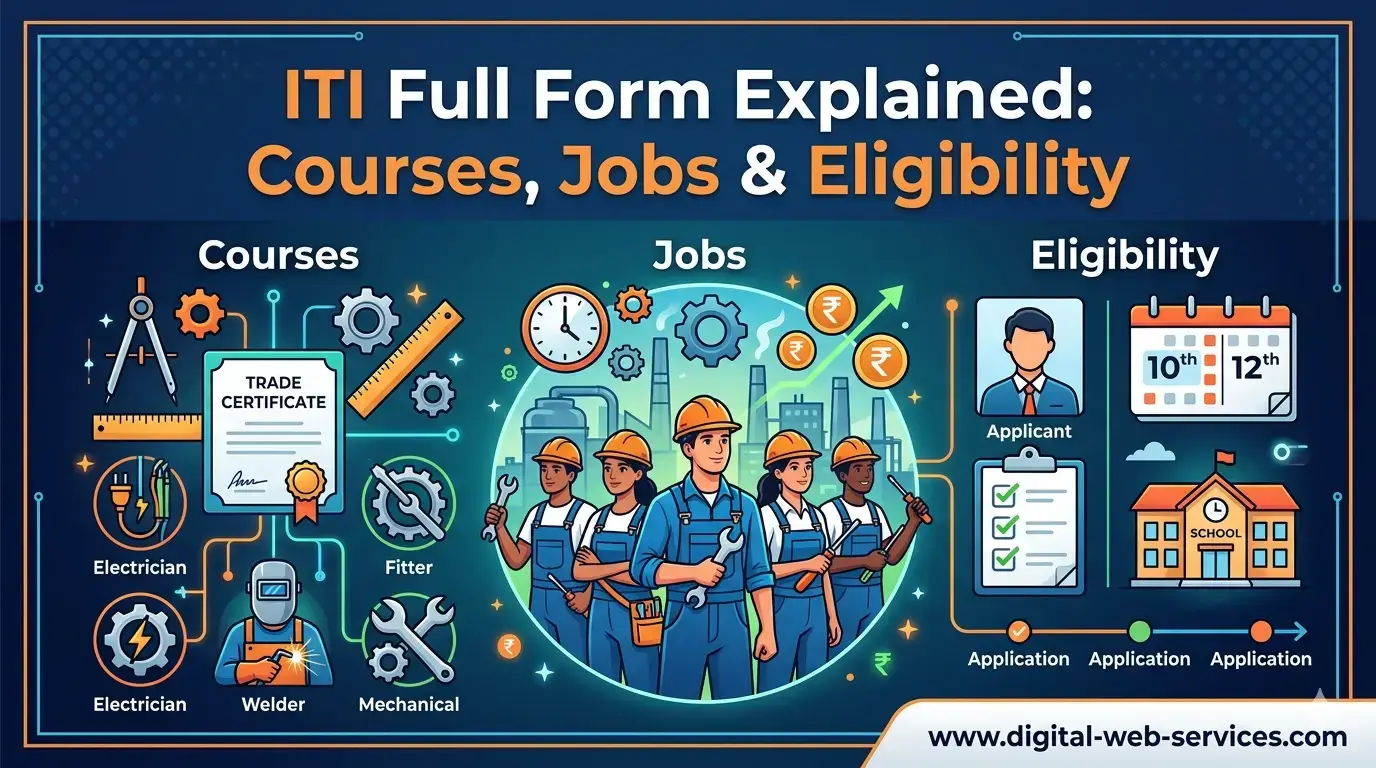
ITI offers a wide range of courses known as trades. These are broadly divided into two categories: engineering trades and non-engineering trades.
Engineering trades focus on technical skills and are highly popular among students who want to work in industries. Some of the most in-demand options include:
- Electrician
- Fitter
- Welder
- Mechanic (Motor Vehicle)
- Computer Operator and Programming Assistant (COPA)
Non-engineering trades are more focused on service-based skills and include:
- Stenography
- Dress Making
- Data Entry Operator
- Hair and Skin Care
In 2026, certain trades are gaining more attention due to industry demand. These include electric vehicle (EV) technician roles, automation-related trades, and basic computer-based technical courses.
Course Duration and Eligibility Criteria
One of the biggest advantages of ITI is its flexible eligibility criteria. Students can apply after completing 8th, 10th, or 12th class, depending on the course they choose.
The duration of ITI courses varies based on the trade:
- Short-term courses: 6 months
- Medium-term courses: 1 year
- Long-term courses: 2 years
This makes ITI a great option for students who want to enter the workforce quickly without spending many years in formal education.
The admission process is usually based on merit or state-level entrance procedures, depending on the institute.
Certification and Recognition
After completing an ITI course, students receive a National Trade Certificate (NTC). This certificate is recognized across India and is valued by both government and private employers.
Since ITIs operate under the Directorate General of Training, the certification holds strong credibility. Many industries prefer ITI-certified candidates because they are trained in practical skills from day one.
Career Opportunities After ITI
ITI opens doors to multiple career paths. One of the biggest strengths of ITI is that it prepares students for immediate employment.
In the private sector, ITI graduates can work in:
- Manufacturing companies
- Construction firms
- Electrical and maintenance services
- IT support roles
In the government sector, there are opportunities in:
- Railways
- Public sector units (PSUs)
- State electricity boards
- Defense services
Another strong advantage is self-employment. Many ITI graduates start their own businesses, such as electrical services, repair workshops, or small-scale manufacturing units.
For example, an ITI-trained electrician can start independent work and earn a stable income without depending on a job.
ITI vs Diploma vs Degree
Many students are confused between ITI, diploma, and degree courses.
ITI is focused on practical training and quick job readiness. It is ideal for students who want to start earning early.
Diploma courses are slightly more theory-based and take around 2–3 years. They offer a balance between practical and academic learning.
Degree programs are more academic and take 3–4 years. They are suitable for students who want deeper theoretical knowledge and higher-level career roles.
Choosing between them depends on your career goals. If your priority is quick employment and skill-based work, ITI is often the better option.
Future Scope of ITI in 2026 and Beyond
The demand for skilled workers is growing rapidly, especially in industries like manufacturing, construction, and technology.
In 2026, new opportunities are emerging in areas such as:
- Electric vehicles (EV) maintenance
- Smart manufacturing and automation
- Renewable energy systems
- Basic robotics and machine operations
The Indian government is also heavily promoting skill-based education through initiatives like Skill India, which is further increasing the value of ITI courses.
This means ITI is no longer just a backup option—it is becoming a primary career path for many students.
Why ITI is a Smart Career Choice
ITI is a strong choice for students who prefer practical work over theoretical studies. It allows you to gain real skills, start earning early, and even build your own business.
With shorter course durations, lower costs, and high employability, ITI offers a clear advantage in today’s competitive job market.
FAQs
Q: What is the full form of ITI?
ITI stands for Industrial Training Institute. It provides vocational training focused on practical skills for various industries.
Q: Who can apply for ITI courses?
Students who have completed 8th, 10th, or 12th grade can apply, depending on the course requirements.
Q: What is the duration of ITI courses?
ITI courses typically range from 6 months to 2 years based on the trade selected.
Q: Is ITI better than a diploma?
ITI is more practical and helps in quick job placement, while diplomas are more theory-based and take longer to complete.
Q: What jobs can I get after ITI?
You can work as an electrician, fitter, technician, mechanic, or in manufacturing and service industries.
Q: Is ITI good for future career growth?
Yes, ITI offers strong career growth, especially in skilled trades, and also provides opportunities for self-employment.
Final Thoughts
Understanding the ITI full form is just the beginning. What truly matters is the value it offers in building real-world skills and opening up career opportunities.
In a world where skills are becoming more important than degrees, ITI stands out as a practical and future-ready option. Whether you want to get a job quickly or start your own work, ITI gives you the foundation to move forward with confidence.

Maria Jain is a Senior Content Strategist and Tech Editor at Digital Web Services, with over 6+ years of experience covering digital marketing, website development, and search engine optimization. She specializes in WordPress site architecture, AI technologies, Web Hosting, topical authority models, and hands-on SaaS & affiliate tool reviews. Maria combines data-driven SEO practices with deep web design and technical insights to publish transparent guides, tool comparisons, and strategic tutorials for digital growth.