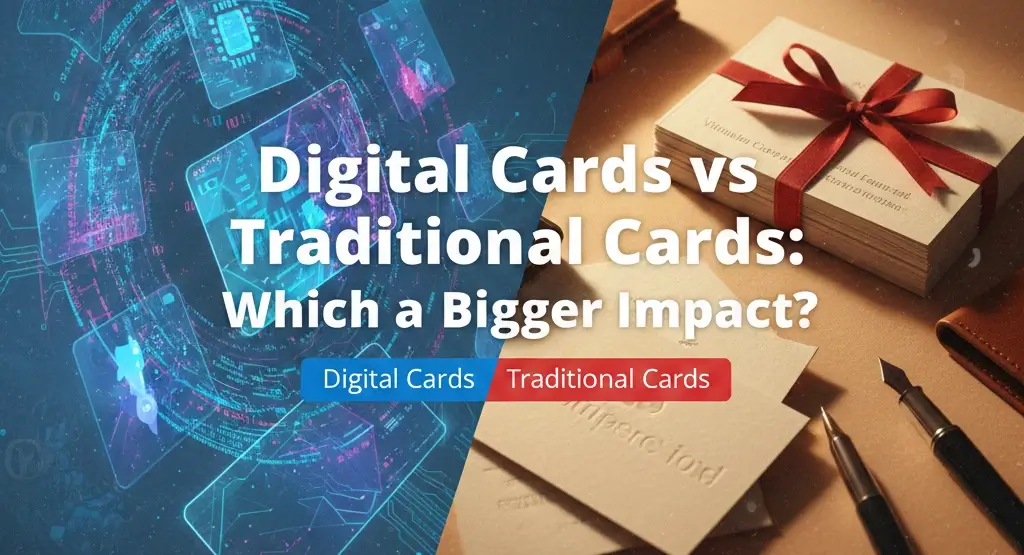
You know that little flutter in your chest when a card shows up? Maybe it’s sitting in your mailbox between the bills, or maybe your phone buzzes with something that isn’t another Slack notification. Either way, someone thought of you. That’s the magic, right? But here’s what keeps me up at night: does the format actually change how much that gesture matters? When you’re juggling birthdays, managing scattered teams across three continents, or trying to make employees feel genuinely seen, the choice between digital greeting cards and old-school paper versions? It’s not trivial.
Your decision hinges on a bunch of moving parts: how people respond emotionally, whether it’s convenient, how far your message travels, what it costs, customization depth, and (yeah, we have to talk about it) environmental footprint. So let’s dig into what really moves the needle in our hyper-connected world. Before we get into the whole digital-versus-paper thing, we need to agree on something: what actually separates a card that sticks in someone’s memory from one that ends up in the recycling bin by Tuesday?
Impact Criteria That Actually Matter (Emotional + Business Results)
Making a card truly memorable isn’t about pretty fonts or expensive cardstock. It’s about hitting specific markers that determine whether your gesture resonates for weeks or fades within hours.
Measurable outcomes (often ignored by competitors)
Here’s where it gets interesting. Beyond just did it arrive, digital cards unlock something paper never can: actual data proving your gesture mattered. You get visibility into open rates, contribution patterns, and can even connect recognition moments to retention metrics and team morale shifts. The numbers are striking—up to 38% more engagement and a whopping 630% boost in follow-up actions compared to traditional cards.
For companies, this means your birthday e-cards online, and corporate e-cards for employees—like Kudoboard e-cards—become tied to real business outcomes such as improved satisfaction scores and better retention rates. Now that we’ve mapped what impact actually means, let’s examine how digital greeting cards measure up against these benchmarks—starting with their strongest advantages.
Emotional resonance and memorability
Here’s what packs the real emotional wallop: hyper-personalized content, impeccable timing, voices from everyone who matters, and that element of genuine surprise. Paper cards? They dominate the keepsake wars because you can prop them on your monitor or tuck them in a drawer for bad days. But online ecards hit differently when they’re stuffed with photos, video clips, and messages from that colleague in Sydney who’d never get near a physical card to sign it. The immediacy and richness can feel incredibly engaging.
Reach, speed, and participation rate
Emotional depth only counts if your card actually lands on time and includes everyone who wants in. Traditional cards run into brutal logistical walls—packages get delayed, addresses go wrong, time zones become enemies. Ever tried wrangling signatures from twenty people on paper? It’s basically herding cats. Meanwhile, group ecards let people contribute whenever they can grab five minutes, and automated nudges make sure nobody’s accidentally excluded.
Digital Greeting Cards (Online eCards)—Where They Win on Impact
Inclusivity at scale with group ecards
Sure, getting more names on a card matters. But the real emotional depth? That comes from what contributors can actually say and show. Multiple people contributing across time zones, automatic reminder pings, zero coordination headaches, instant sharing—this is where group ecards shine for team celebrations, goodbye cards for departing colleagues, baby announcements, and appreciation campaigns. Your remote workers aren’t sitting on the sidelines anymore. Everyone participates.
Personalization that goes beyond handwriting
Think photos, animated GIFs, video messages, recorded voice notes, callbacks to inside jokes, and custom designs that paper simply cannot accommodate. Platforms like Kudoboard e-cards enable teams to build collaborative memory timeline experiences that weave together richer narratives than any handwritten note alone could achieve. The emotional payoff? Significantly bigger.
Instant delivery + scheduled sends (perfect timing = bigger impact)
Even the most touching multimedia masterpiece falls flat if it shows up seventy-two hours late or dings someone’s phone at 4 AM.Schedule birthday e-cards online to arrive the second someone’s alarm goes off, or orchestrate surprise reveals during virtual gatherings. Time-zone intelligence means your global team participates without anyone feeling like an afterthought.
Digital-first experiences people expect in 2026
Perfect timing is baseline in 2026—people now expect card experiences that mesh naturally with how they already connect and celebrate.Recent data shows the global digital business card market growing at 11.2% CAGR from 2022 to 2027. This trajectory reflects shifting expectations: mobile-optimized experiences, QR-code reveals at hybrid events, and celebrations that seamlessly blend remote and in-person participation.
Corporate e-cards for employees that drive recognition culture
These aren’t just consumer preferences—they’re fundamentally changing how smart companies approach employee recognition. Common applications include peer kudos, manager appreciation notes, new hire welcomes, and work anniversaries. The sweet spot? Making recognition visible without tipping into performative territory through thoughtful privacy controls.
When you integrate with Slack, Teams, and HR systems, recognition becomes woven into your company’s daily fabric instead of feeling bolted-on. Digital cards clearly win on speed, scale, and data. But writing off paper cards completely? That would be shortsighted—they still create irreplaceable impact in certain contexts.
Traditional Paper Cards—Where They Still Create a Strong Impact
Tangibility and keepsake value
Physical cards carry a unique weight. You hold them. Display them. Save them in boxes you’ll rediscover years later. For significant life moments—weddings, losses, major career milestones—that tangible presence amplifies emotional impact in ways pixels haven’t entirely matched.
Limitations that reduce real-world impact
But here’s the catch: the exact qualities that make paper cards feel special also create friction that can sabotage your good intentions. Delivery delays, lost mail, signature bottlenecks, awkward coordination when you need multiple contributors—these reduce real-world effectiveness. Paper cards frequently get misplaced, forgotten, or discarded, which means your thoughtful effort might not endure as long as you’d imagined.
Making the Right Choice for Your Situation
Your choice should align with your specific context. For distributed teams and spontaneous celebrations, digital greeting cards and online ecards consistently outperform paper. They’re faster, more inclusive, and coordination is effortless. For intimate relationships and milestone moments where keepsake value dominates, traditional cards still deliver.
Corporate recognition programs benefit most from corporate ecards for employees because they support frequent recognition rhythms, participation analytics, and smooth integration with communication infrastructure. Just dodge the forced fun trap by making contributions voluntary and offering thoughtful message prompts.
FAQs
1. What are the advantages of e-cards?
They eliminate printing, postage, and manual delivery, saving considerable time and resources. E-cards also cost significantly less than physical cards, freeing up the budget for more strategic investments.
2. How effective are digital business cards?
Digital business cards drive a 35% improvement in follow-up rates compared to traditional cards, making meaningful connections far more likely. Always with you: Your digital card lives on your phone, which means no more I forgot my card moments.
3. Can digital cards feel as personal as handwritten notes?
Absolutely. Adding photos, videos, specific memories, and inside jokes often feels more personal than generic handwriting. The key is avoiding template fatigue by customizing your message to the recipient’s personality and your shared experiences.
Final Thoughts on Choosing the Right Card Format
Both approaches have their place, but the impact depends on what matters most to you. Need speed, broad inclusion, and measurable results? Digital wins decisively. Creating a physical memento for an intimate milestone? Paper still delivers. The smartest move? Don’t force yourself into a corner—hybrid approaches that combine digital reach with selective physical keepsakes often create the most powerful impact.

Maria Jain is a Senior Content Strategist and Tech Editor at Digital Web Services, with over 6+ years of experience covering digital marketing, website development, and search engine optimization. She specializes in WordPress site architecture, AI technologies, Web Hosting, topical authority models, and hands-on SaaS & affiliate tool reviews. Maria combines data-driven SEO practices with deep web design and technical insights to publish transparent guides, tool comparisons, and strategic tutorials for digital growth.