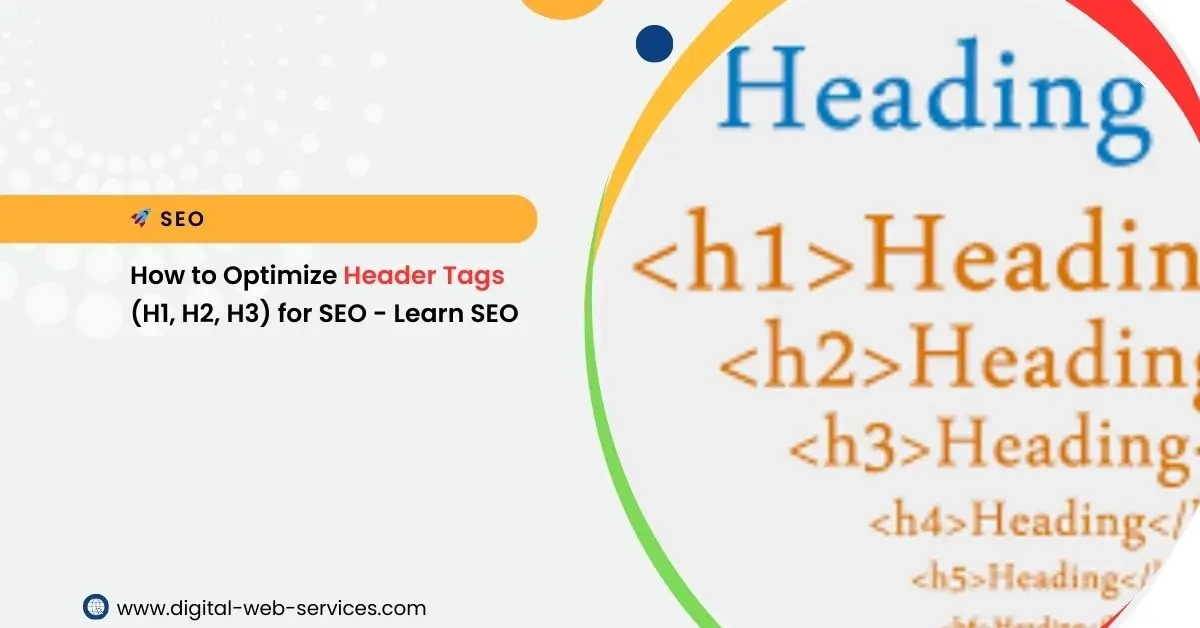
When it comes to on-page SEO, optimizing header tags (H1, H2, H3) is essential. These tags help search engines understand the structure and content of your web pages, contributing to better rankings. Header tags are an important aspect of organizing your content and making it easier for both users and search engines to navigate.
Why Are Header Tags Important for SEO?
Header tags are used to define headings and subheadings in your content. They have a direct impact on SEO by providing structure and context for both search engines and users. Properly optimized header tags allow search engines to understand the main topic of the page and the hierarchy of information. This helps improve your rankings for relevant search queries.
- H1 Tag: The H1 tag is the most important header tag and is typically used for the main title of the page. It should contain the primary keyword and reflect the content of the page. Ideally, each page should have only one H1 tag to avoid confusion for search engines.
- H2 Tag: The H2 tag is used for subsections or secondary headings within the content. It helps break down the content into easily digestible sections, which not only enhances readability but also helps search engines understand the relationship between different sections of the page.
- H3 Tag: The H3 tag is used for further subdivisions under H2 headings. These tags are often used for even more specific details or supporting information. While not as important as H1 and H2, H3 tags still play a role in organizing content and improving SEO.
How to Optimize Header Tags for SEO
- Use Keywords in Your Header Tags
- Make sure your primary keyword is included in your H1 tag. This signals to search engines that the content on the page is relevant to that keyword.
- Include variations of your keywords in H2 and H3 tags. For instance, if your H1 is “How to Optimize Header Tags for SEO,” your H2 could be “Why Header Tags Matter for SEO,” and your H3 could be “Best Practices for H1, H2, and H3 Tags.”
- Maintain Proper Hierarchy
- It’s essential to maintain a proper hierarchy in your header tags. Use H1 for the main title, H2 for sections, and H3 for subsections. This structure makes it easy for both users and search engines to follow the content.
- Avoid skipping header tags (e.g., going from H1 to H3 without using H2) as it confuses search engines and affects SEO.
- Be Descriptive and Relevant
- Header tags should provide a clear description of the content that follows. Avoid vague or overly generic headings. For example, instead of using “Introduction,” use something more descriptive like “Introduction to SEO Best Practices for Websites.”
- Optimize for Readability
- While header tags are important for SEO, they also improve user experience. Use them to break up long content into smaller, more digestible sections.
- Keep headings concise, clear, and to the point. Use H1, H2, and H3 tags to create a logical flow of information.
- Avoid Keyword Stuffing
- While it’s important to use keywords in header tags, avoid keyword stuffing. This can negatively affect your SEO and result in penalties. Use keywords naturally and contextually.
Tools to Help Optimize Header Tags
There are several tools available to help you analyze and optimize your header tags:
- Google Search Console: Use this tool to monitor how your pages are performing and how header tags are contributing to your SEO efforts.
- Yoast SEO: If you’re using WordPress, this plugin provides real-time suggestions for optimizing header tags and other on-page elements.
- SEMrush or Ahrefs: These tools provide keyword analysis, backlink tracking, and other important SEO data that can help you refine your header tag strategy.
Conclusion
Optimizing header tags is a key element in on-page SEO. By using H1, H2, and H3 tags effectively, you can improve your website’s visibility, make your content more readable, and enhance the user experience. Learn on-page SEO with Digital Web Services to refine your SEO strategy and improve your site’s rankings.
By following these best practices for header tags optimization, you’ll not only boost SEO but also improve your website’s user experience, making it more attractive to both users and search engines.

Maria Jain is a Senior Content Strategist and Tech Editor at Digital Web Services, with over 6+ years of experience covering digital marketing, website development, and search engine optimization. She specializes in WordPress site architecture, AI technologies, Web Hosting, topical authority models, and hands-on SaaS & affiliate tool reviews. Maria combines data-driven SEO practices with deep web design and technical insights to publish transparent guides, tool comparisons, and strategic tutorials for digital growth.