The internet is changing faster than most of us can keep up with. And as digital trends shift, so does the way we discover and interact with websites. Whether you’re an entrepreneur building a new brand or someone sketching ideas in the back of a notebook at midnight, one thing still remains true: it all starts with a name. A domain name. And choosing that name often begins with a domain name search.
But here’s the surprise—what was effective a decade ago might not be effective now. Then, getting a cheap .com domain was half the battle. That was sufficient to possess something short, easy to remember, and hopefully spelled correctly. Today, in the era of voice assistants and AI-powered interfaces, the rules have changed. And your domain approach must catch up.
Say It, Don’t Just Type It
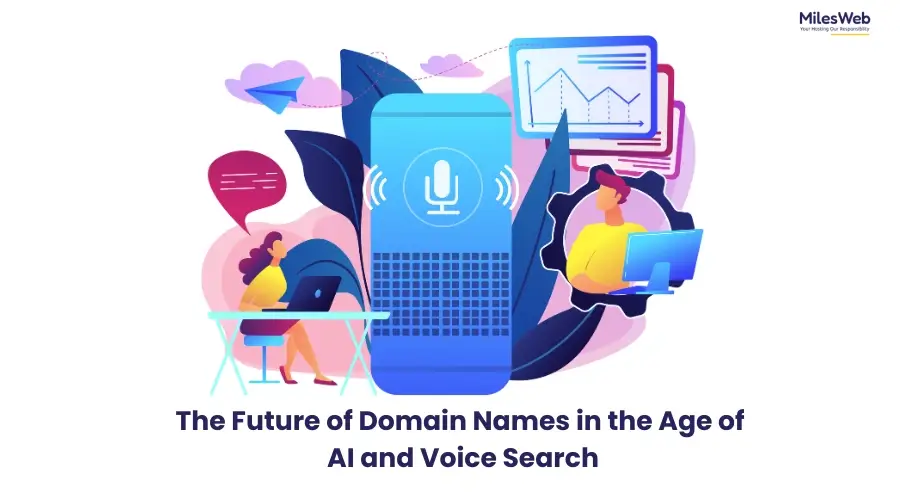
One of the most subtle yet transformative shifts is how people are saying domain names now, not just typing them. With smart speakers in kitchens, phones in pockets, and cars that talk back, your domain has to make sense out loud. If Siri or Alexa can’t understand the name on the first try, you’ve already lost the user.
This changes the approach to naming altogether. A smart wordplay might read well on a screen, but if it’s misheard or hard to pronounce, you’ve lost half your audience. Think of names like “Flicker” vs. “Flickr.” The latter may have made sense back then, but today, it would likely be misinterpreted by voice search. Simplicity is no longer a nice-to-have; it’s essential.
AI Is Predictive—Are You?
AI-driven search doesn’t depend on perfect spelling or exact match anymore. It relies on context. It predicts intent. This means your domain name needs to reflect what your audience means—not just what they type.
For instance, if you run a local home repair service, a domain like FastFixPro.com does more than just sound sharp—it aligns with how people search conversationally: “Hey Google, who can fix my sink fast?” AI understands what you mean, not just the words you use. Your domain should echo that intent.
And here’s where MilesWeb has led the way. Their hosting platform doesn’t merely accommodate the domain you purchase—it supports the experience you’re attempting to build beneath that name. Fast, secure, and future-proof.
Keyword Stuffing Is Out. Brand Clarity Is In.
Let’s be real—stuffing SEO keywords into a domain was the preferred shortcut, at one time. However, AI does not pay for clutter. It pays for clarity. While, say, BuyCheapLaptopsNow.com might have delivered in 2010, today it sounds spammy, outdated, and completely untrustworthy.
Use domain names that feel like brands. Names that tell a story or hint at one. Imagine domains like Zoom.com, Dropbox.com, or Spotify.com. These aren’t stuffed with keywords—they’re clear, memorable, and built for connection. Such domains give their user a feeling before even clicking.
Voice Search Loves Predictability
When someone instructs their voice assistant to “book a yoga class,” the assistant doesn’t require choices—it requires clarity. And clarity begins with familiar, understandable domains. If your website is Xpr3ssYoga247.net, it may be genius visually, but it’s a disaster in voice search. The assistant will probably recommend YogaToday.com instead. Why? As it’s simple to say and doesn’t confuse the system.
It’s time to think like the machine—not in complexity, but in simplicity. Your domain should sound like something people already expect to hear.
Extension Trends Are Evolving As Well
For many years, .com ruled—and to some extent, it still does. But with the emergence of niche extensions such as .tech, .shop, .ai, and even .studio, brands can now have some scope. Just don’t pick a trendy extension just to be different.
Voice search and AI applications still lean heavily towards .com domains in most instances because that’s what people tend towards. So while it’s easy to opt for something cool like .ninja, ensure that it doesn’t negatively impact your voice results accessibility or confuse your audience.
Your Domain Is Now Part of the Conversation
Literally. People are speaking domain names out loud more than ever. Whether they’re asking a smart assistant, sharing it on a podcast, or giving it over a call, the spoken element is key. So your name shouldn’t read well; it should say well.
Ask yourself: Can someone say it once and have the other person remember it? Can it be spelled just by hearing it? If the answer is no, then it might be worth reconsidering.
The Domain Is Still the Doorway
Even in an AI-saturated world, the digital domain name hasn’t lost its place—it’s just become more layered. It is still the doorway to your brand, your voice, your product. But now, that doorway needs to swing open smoothly for both humans and algorithms.
You’re not just naming a website; you’re naming an experience. You’re giving search engines, voice assistants, and most importantly, your users a clear signal: “This is where you belong.”
So, What Should You Do Now?
Say the name out loud. Imagine asking Alexa to understand it. Consider its appearance, sound, and feel. And once you’re ready, ensure the domain is supported by solid hosting that’s future-proof.
Prominent web hosting providers such as MilesWeb not only help you secure your domain—they provide it with the infrastructure to succeed in this constantly shifting digital space we work in.
Conclusion
The future of domain names is not about keyword stuffing, but about building clarity—spoken, seen, and heard. In an AI- and voice-dominated world, the domain name that you select must relate not just exist.”.
Although the affordable domain names might be enticing, keep in mind: the actual investment is in making your brand voice future-ready. With the right name and a companion like MilesWeb, your domain won’t just exist online—it will dominate.

Maria Jain is a Senior Content Strategist and Tech Editor at Digital Web Services, with over 6+ years of experience covering digital marketing, website development, and search engine optimization. She specializes in WordPress site architecture, AI technologies, Web Hosting, topical authority models, and hands-on SaaS & affiliate tool reviews. Maria combines data-driven SEO practices with deep web design and technical insights to publish transparent guides, tool comparisons, and strategic tutorials for digital growth.